
Image: Global Fashion Agenda/Global Fashion Summit
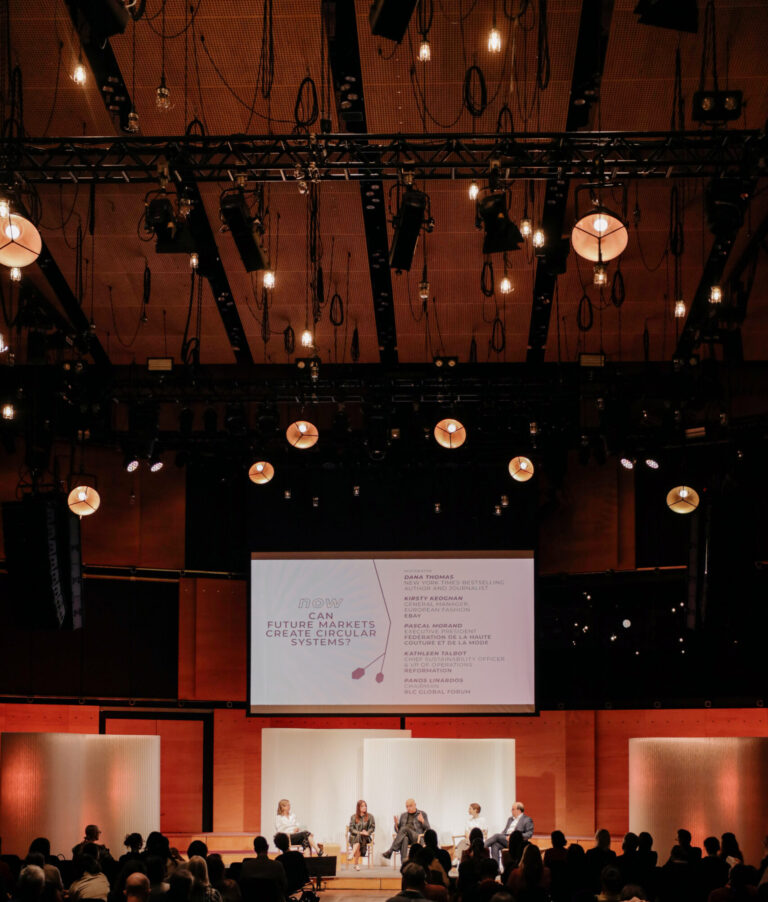
The 2026 Copenhagen Summit at the DR Koncerthuset made one thing certain: we have moved beyond the era of “ambition” and entered a phase of Mandatory Renewal. After exploring the Substance, Systems, and Soul of our industry over the last few days, this final reflection isn’t about looking back—it’s about the refreshing new ideas we are carrying forward into the frameworks that will define the next decade.
Real success now requires leadership that looks far beyond traditional advertising. To build a resilient luxury brand, businesses must align their strategies across four critical pillars: Soul, Substance, Systems, and Capital.
1. Soul: Radical Transparency & Human Well-being
At the root of every premium luxury product is human skill. The Soul pillar represents a brand’s true purpose, ethical values, and the human workforce anchoring the supply chain.
- Humanistic Capitalism: Protecting this soul means treating craftsmen and artisans not just as labor costs, but as the true protectors of cultural heritage, as modeled by the timeless business philosophy of Brunello Cucinelli.
- Community Dignity: This global vision must come down to a human scale. At the summit, Dr. Harshita Umesh (Founder of Vaada Hope Foundation, India) brought a vital medical and social lens to the stage. She reminded the industry that climate resilience is inseparable from women’s health. The “Soul” of sustainable luxury in India must prioritize the well-being of the women who anchor our supply chains.

Image Courtesy: Leah Newhouse, Pexels
2. Substance: Next Gen Innovation & Material Integrity
The future demands that luxury brands stop using superficial greenwashing and start focusing on verifiable material truth. The Substance pillar represents what your product is actually made of and how it impacts the planet.
- Biocentric Adaptation: One of the most inspiring shifts this year was seeing the Next Gen Assembly take center stage. These young leaders are the current conscience of the industry, pushing for a model where Nature is finally treated as a legal stakeholder in the boardroom. Circular luxury is no longer just about basic recycling; it is about nature-centered reciprocity.
- The 5th C of Luxury: This need for material truth was championed by Pamela Anderson, representing Pandora. She challenged brands to lead with transparency, revealing that the brand tracks the carbon footprint of every lab-grown diamond—treating carbon as a new “5th C” of luxury alongside Cut, Colour, Clarity, and Carat.
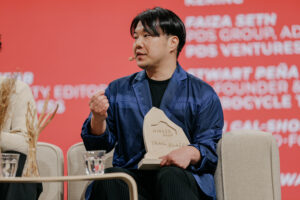
Kazuya Kawasaki, CEO Synflux.- Image: Global Fashion Agenda/Global Fashion Summit
3. Systems: AI Infrastructure & Closed-Loop Water Stewardship
A beautiful purpose will still fail if it is backed by an inefficient, wasteful supply chain. The Systems pillar focuses on overhauling operational infrastructure using advanced data tracking, automation, and industrial loops to eliminate waste before it ever starts.
- AI and Predictive Tech: True circularity requires engineering data straight into production. By integrating predictive AI, premium brands can accurately forecast consumer demand, track materials immutably, and prevent overproduction. A perfect example is design innovator Synflux (winner of the GFA Trailblazer Programme), who uses AI-driven, algorithmic, zero-waste digital pattern-making to completely redesign the production workflow.
- Water Stewardship as a System: Next-era infrastructure is expanding to manage physical resources, specifically focusing on Ocean Health and Wastewater. The summit highlighted fashion’s deep footprint on our waters—from microplastic pollution to dye runoff. True stewardship means moving away from manual tracking to automated, high-tech filtration and recycling loops that allow factories to reuse 100% of their processing water, protecting our marine ecosystems.
4. Capital: The Financial Engine of Resilience
None of these changes can grow or scale without financial support. Finance was arguably the most practical breakthrough of the 2026 summit, proving that sustainability is no longer a marketing cost—it’s a core financial discipline.
- Coordinated Global Investment: With the launch of the new Fashion CFO Agenda 2026 and the high-level global alliance between the Global Fashion Agenda and the Sustainable Markets Initiative (SMI), the financial engine is officially ready. This partnership will bridge global capital and the fashion industry, ensuring that a resilient future is a funded one.
Looking Forward: The Roadmap to Implementation in India
The question is no longer what we need to do, but how fast we can implement these systems while keeping the soul of the craft alive. While these four pillars represent a global framework, their most exciting application is happening in India.
During the summit, Ambassador Manish Prabhat highlighted the massive strides being made in India’s textile sector. However, the conversation also sparked a vital nuance: Circularity must be Responsible. Whether it is scaling textile recycling or managing wastewater, India is moving toward holistic systems that protect local ecosystems as much as global supply chains.
Over the coming weeks, this blog will turn into an exclusive series exploring how this exact ecosystem—Soul, Substance, Systems, and Capital—applies directly to India’s rapidly growing premium heritage and luxury market. Stay tuned!