


A garment has a story that begins long before it reaches a store. But how much do we really know about where its materials come from and how they move through the supply chain?
Amit Gautam, Founder and CEO of TextileGenesis, is working to address this challenge through digital traceability. A Lectra company, TextileGenesis helps fashion and luxury brands track materials from their source through the different stages of production.
We spoke to Amit about how the platform works, why traceability matters for luxury, and how technology can help brands verify material origins while bringing greater visibility to the people and craftsmanship behind their products.
1. TextileGenesis has developed a digital traceability platform for the fashion and textile supply chain. How does the platform work, and what does it enable brands to see or verify?
Amit Gautam:
TextileGenesis, a Lectra company, is a digital traceability platform that connects brands, suppliers, sustainability standards and raw material producers on a shared network. The platform enables brands to trace materials from their source through every stage of manufacturing to the finished product. Rather than relying on spreadsheets, emails, and manual document collection, traceability data is captured and verified directly across the supply chain.
This allows brands to verify where materials originated, understand which suppliers were involved in production, validate sustainability claims, and gain visibility beyond Tier 1 suppliers. The result is trusted, auditable data that can be used for compliance, risk management, sustainability reporting, and consumer-facing transparency.
2. Does TextileGenesis work only with textiles and cotton, or does its traceability extend to other materials and products as well?
Amit Gautam:
While TextileGenesis initially gained recognition through programs focused on preferred cotton, the platform today supports a broad range of materials. These include recycled materials, man-made cellulosic fibers, animal fibers such as wool and cashmere, leather, synthetics and linen. We also do this for more product categories like footwear and accessories.
The platform is designed to be material-agnostic, allowing brands to build traceability programs across multiple sourcing categories within a single system. Many customers now use TextileGenesis to trace both preferred and conventional materials across entire product portfolios.
TextileGenesis, Fiber-To-Retail Solution
3. How does TextileGenesis connect the different stages of a material’s journey, from its source through the supply chain to the finished product?
Amit Gautam:
TextileGenesis connects every participant in the supply chain through a digital chain of custody. Material producers, spinners, mills, manufacturers and brands each provide transaction and production data as materials move through the supply chain.
Depending on the level of traceability required, the platform can map supplier networks, enable peer-to-peer supplier validation, or provide full Fiber-to-Retail traceability from material origin to finished goods. This creates a continuous, verifiable record of how a material has been transformed and transferred at every stage, resulting in a clear chain of custody from source to consumer.
4. TextileGenesis uses technologies including digital tokens and AI. How do these technologies contribute to tracing and verifying materials through the supply chain?
Amit Gautam:
At the heart of TextileGenesis’ Fiber-to-Retail approach is Fibercoin™, a digital token that represents a verified quantity of material at origin. One kilogram of verified material creates one digital token, which then moves through the supply chain alongside that material. This creates a closed-loop system that helps prevent double counting and enables volume reconciliation throughout the chain.
Artificial intelligence plays a complementary role by helping to automate the verification of critical supply chain documents.
AI can extract and validate information from certificates, invoices, shipment documentation, and transaction records, helping brands and suppliers reduce manual effort while improving data quality and integrity.
5. What are brands looking for most from traceability today, and how have their needs changed in recent years?
Amit Gautam:
A few years ago, many brands viewed traceability primarily as a sustainability initiative. Today, it has become a business-critical capability driven by regulation, risk management, and consumer expectations.
The conversation has shifted from “How do we collect data?” to “How do we verify that data and use it with confidence?”.
Brands increasingly need trustworthy evidence behind their environmental and social claims. They are looking for visibility beyond Tier 1 suppliers, stronger verification of material origins, support for regulatory compliance, and reliable data that can be used across reporting, sourcing, product development, and consumer communications. The conversation has shifted from “How do we collect data?” to “How do we verify that data and use it with confidence?”.
6. TextileGenesis has described traceability as becoming “critical infrastructure” for the future of fashion. Why has traceability become so important now?
Amit Gautam:
Fashion is entering a new era where claims need to be proven, not simply declared. Brands are facing growing expectations from regulators, investors, consumers, and society to provide greater transparency into how products are made and where materials come from.
Traceability provides the trusted supply chain data needed to support responsible sourcing, regulatory compliance, risk assessment, sustainability reporting, and consumer transparency. As requirements continue to expand globally, traceability is becoming foundational infrastructure in much the same way ERP systems became essential for operational management decades ago.

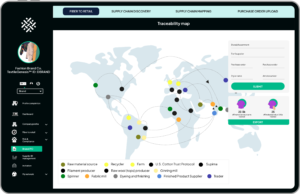
TextileGenesis, Traceability Platform Usage
7. Digital Product Passports are becoming increasingly important in fashion. What exactly is a Digital Product Passport, and what role can TextileGenesis play in helping brands prepare for this shift?
Amit Gautam:
A Digital Product Passport, or DPP, is a digital record that provides structured information about a product, including details related to its composition, origin, sustainability characteristics, and lifecycle. It is expected to become an important component of upcoming European product transparency requirements.
TextileGenesis provides a significant portion of the data points that will be required for Digital Product Passports. More broadly, Lectra helps brands prepare for the DPP through the combination of TextileGenesis and Kubix Link. While TextileGenesis captures and verifies upstream traceability data, Kubix Link acts as a central hub for product
information, bringing together design, sourcing, supplier, compliance, certification, and sustainability data. By connecting these systems, brands can create a unified digital thread across the product lifecycle, from raw material sourcing to finished product. This means that the Digital Product Passport is no longer a document assembled at the end of the process, but rather the natural outcome of connected, well-governed data and traceability systems.
8. How can traceability work in more craft-led parts of fashion, where materials pass through smaller suppliers, artisans and traditional production networks?
Amit Gautam:
Traceability should not come at the expense of craftsmanship. In fact, we believe it can help preserve and elevate the stories behind materials and products. Technology makes it possible to connect smaller suppliers and producers into a digital value chain while maintaining visibility into the unique contributions made along the way.
Traceability provides the evidence, while craftsmanship provides the story.
A traceability platform can document where materials originated, how they were transformed, and who participated in that journey. For luxury brands especially, this creates an opportunity to combine verified provenance with the rich human narratives that make craft, heritage, and artisanal production so valuable. Traceability provides the evidence, while craftsmanship provides the story.
9. TextileGenesis works with luxury companies including Zegna. Could you share an example of how a luxury brand is using TextileGenesis and what it is helping the brand achieve?
Amit Gautam:
The Ermenegildo Zegna Group highlighted in its annual sustainability impact report its partnership with TextileGenesis as part of its efforts to validate the provenance and authenticity of materials across its supply chain. The collaboration supports greater transparency and strengthens confidence in material claims.
Beyond Zegna, TextileGenesis is used by 60% of the top 50 leading luxury groups and brands. These organizations are using traceability not only to support compliance and sustainability goals, but also to strengthen sourcing decisions, risk management, and customer trust.
10. As traceability becomes more established across the industry, what do you see as the next stage in its evolution for fashion and luxury?
Amit Gautam:
The next chapter is about moving from transparency to intelligence. Once brands have a trusted foundation of supply chain data, they can begin using that information to drive better business decisions.
We see traceability increasingly supporting areas such as supply chain risk management, Digital Product Passports, impact assessment, Scope 3 emissions calculations, regulatory compliance, and consumer engagement. In the future, traceability data will not sit in a separate sustainability system. It will become part of the core digital infrastructure that powers sourcing, product development, compliance, and customer experiences across the fashion industry.
Importantly, traceability is no longer the sole responsibility of sustainability teams.
It now impacts multiple functions across the organization. Product development teams need traceability data to make informed material choices early in the design process. Sourcing and procurement teams use it to assess supplier performance and mitigate supply chain risks.
Compliance and legal teams rely on it to meet evolving regulatory requirements such as Digital Product Passports and sustainability disclosures. Marketing and communications teams need verified data to support credible consumer-facing claims and avoid greenwashing risks. As a result, traceability has evolved from a reporting exercise into a strategic business capability that enables better decisions across the entire product lifecycle.