

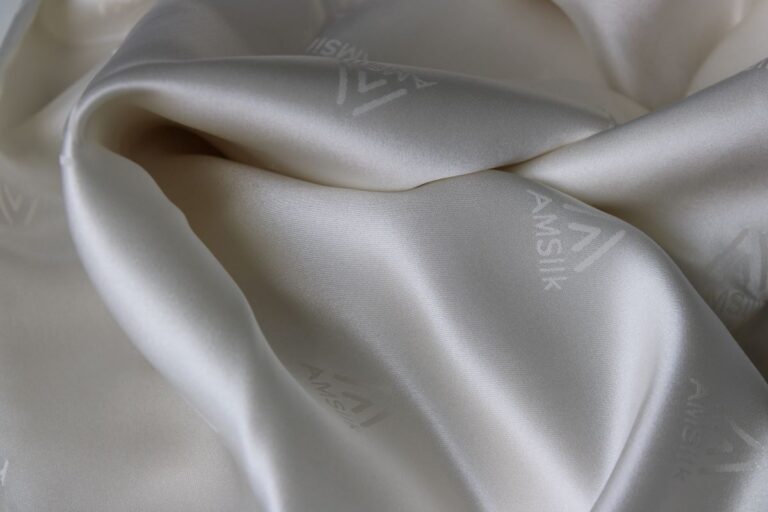
What happens when biotechnology meets luxury fashion? German biotechnology company AMSilk is exploring that question through silk proteins produced using precision fermentation. Its collaboration with Balenciaga has brought its bioengineered silk yarns into the house’s Spring 2026 ready-to-wear collection, including a white wrap blouse and a black wrap dress, and into its 55th Couture Collection, where an evening cocoon gown features an AMSilk-blend fabric.
AMSilk Yarn was also featured in TIME’s Best Inventions of 2026 list, bringing further attention to this emerging area of material innovation.
In this conversation with LuxuryNext, AMSilk discusses its work with Balenciaga, the relationship between material development and design, and the challenges of bringing bioengineered materials into luxury fashion.
1. How did the collaboration between AMSilk and Balenciaga begin, and what was the original idea behind it?
AM Silk
Balenciaga and Kering regularly evaluate emerging material innovations. Following an extensive due diligence process, AMSilk stood out for its maturity, scientific leadership, the luxury appeal of its bioengineered silk materials, and its strong alignment with Kering’s decarbonization goals. The shared objective was to explore how biotech silk could be integrated into future luxury fashion collections.
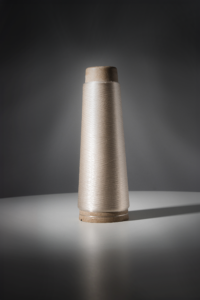
AMSilk Premium Multifilament, Photocredit: AMSilk
2. Your silk protein yarns have appeared in Balenciaga’s Spring 2026 collection and its 55th Couture Collection. Could you tell us more about the pieces, particularly the evening cocoon gown?
AM Silk
We believe biotechnology can fundamentally expand what materials are capable of. By engineering proteins at the molecular level, we can tailor material properties such as aesthetics, comfort and performance in ways that are difficult to achieve with conventional materials alone. Looking ahead, we see our bioengineered silk proteins not only as an alternative to traditional silk, but as the foundation of a broader premium material category that can enable entirely new designs and applications across fashion and other high-value industries.
The Spring 2026 collection marked the commercial debut of garments made with AMSilk’s bioengineered silk protein yarns, including a white wrap blouse and a black wrap dress, available online and in selected Balenciaga stores worldwide. The collaboration later expanded into Balenciaga’s 55th Couture Collection, where an evening cocoon gown featured an AMSilk-blend fabric, showcasing the potential of biotechnology-enabled materials in couture craftsmanship.
3. What was it like working with Pierpaolo Piccioli and the Balenciaga design team? How did their approach to design influence the way your material was used?
AM Silk
The creative direction and design process were entirely led by Balenciaga. From our perspective, the collaboration highlighted how innovative materials must meet not only technical requirements, but also the aesthetic and craftsmanship standards expected in luxury fashion.

AMSilk Spinning, Photocredit: AMSilk
4. For someone familiar with traditional silk, how would you explain what is different about AMSilk’s bio-based silk?
AM Silk
Traditional silk is produced by silkworms. AMSilk produces silk proteins through precision fermentation and transforms them into multifilaments. The result is a silk-inspired material that is animal-free and readily biodegradable. In an ISO-compliant life-cycle assessment, AMSilk’s silk showed 81% lower climate impact overall, with 90% lower acidification, 73% lower freshwater eutrophication, 92% lower land use and 97% lower water use compared to conventional mulberry silk, while maintaining the qualities required for luxury-performance applications.
5. What did you learn from seeing your material move from development into an actual fashion collection?
AM Silk
One key lesson was the importance of close collaboration across the entire value chain. Bringing a new material into fashion requires not only innovation, but also rigorous testing, scalability, transparency and alignment between material developers, manufacturers and brands.

AMSilk for Omega Wristband, Photocredit: AMSilk
6. Has AMSilk worked with other fashion brands or designers on silk-based materials? If so, what have you learned from those collaborations?
AM Silk
We continue to explore applications for our bioengineered silk materials across the luxury sector. Across collaborations, we have learned that long-term partnerships and early integration are essential when introducing entirely new material categories.
7. What are the biggest challenges in taking innovative materials from development into actual fashion collections?
AM Silk
The biggest challenge is scaling innovation while maintaining the quality, consistency and performance expected by luxury brands. In addition, brands increasingly require robust environmental data, reliable supply chains and proven manufacturing readiness before introducing new materials into collections.
8. Looking ahead, what would you like to see bio-based silk bring to fashion, both in terms of design and how luxury materials are made?
AM Silk
We believe biotechnology can fundamentally expand what materials are capable of. By engineering proteins at the molecular level, we can tailor material properties such as aesthetics, comfort and performance in ways that are difficult to achieve with conventional materials alone. Looking ahead, we see our bioengineered silk proteins not only as an alternative to traditional silk, but as the foundation of a broader premium material category that can enable entirely new designs and applications across fashion and other high-value industries.
Featured Image: AMSilk Sample Silk jacquard, Photocredit: AMSilk