
Returning for its 16th edition under the theme CRAFTED: Heritage. Innovation. Circular Futures., Lagos Fashion Week 2026 opened with conversations that extended beyond design and aesthetics to examine the foundations shaping the African fashion industry.
From the preservation of traditional craftsmanship to business viability and access to capital, Day 1 brought together designers, cultural practitioners and industry experts to consider what it will take to build a more sustainable and commercially resilient fashion ecosystem.
One question stood out: how can an industry built on generations of craftsmanship ensure that the people behind that knowledge are recognized, supported and included in the value they create?
The People Behind the Craft: Rethinking Value in African Fashion
One of the day’s key discussions was the Fashion Business Series session, Crafted: By Whom, For Whom and at What Cost?
It is necessary to build a sustainable relationship with African artisans, because the success of any African fashion brand relies on the craft people.
— Aisha Ayensu, Founder and Creative Director of Ghanaian fashion brand Christie Brown.
Moderated by media personality and digital strategist Ayo Lawal, the panel featured Sunny Dolat, Kenyan Cultural Producer and Creative Director; Ifebuche Madu, Founder of Afrikstabel; Aisha Ayensu, Founder and Creative Director of Ghanaian fashion brand Christie Brown; and Dr Christine Checinska, Senior Curator, Africa and Diaspora Textiles and Fashion at the Victoria and Albert Museum.
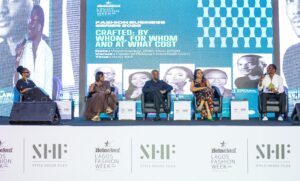
Image Courtesy: Lagos Fashion Week
The conversation raises a fundamental question for the industry: celebrating craftsmanship is not enough. Its future also depends on recognizing the people, skills and cultural knowledge that sustain it.
For the wider luxury sector, this is particularly relevant. Craftsmanship has long been central to luxury’s identity, but its enduring value depends on the communities and knowledge systems that preserve it.
Akwete Reimagined: Bringing Heritage into Contemporary Design
The relationship between traditional craftsmanship and contemporary fashion found expression in Akwete Reimagined, a capsule collection collaboration between Nigerian designer Emmy Kasbit and ALÁRA.
The collection explored how Akwete, a traditional Nigerian woven textile, could be reinterpreted through contemporary design. The presentation demonstrated the potential of heritage textiles to enter new creative and commercial contexts while retaining their cultural significance.
For designers working with traditional materials, the challenge extends beyond incorporating them into modern silhouettes. It involves understanding their origins, the knowledge behind their production and the communities that have sustained these practices.
The opportunity lies in connecting heritage with contemporary markets, creating new relevance for traditional craftsmanship and the people behind it.
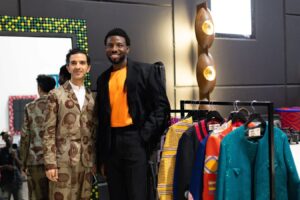
Imran Amed, BoF‘s Founder and and Designer Emmy Kasbit, Image Courtesy: Lagos Fashion Week
Beyond Creative Recognition: Building Fashion Businesses That Last
Day 1 also addressed an equally important dimension of the industry’s future: commercial viability.
The session on Fashion Business Modelling and Franchising, sponsored by Deloitte and moderated by Temitope Olugbile, Manager, Strategy and Business Design, explored business models and the structures required for fashion entrepreneurs to grow.
Another session, Beyond the Runway: Are You Making Money or Just Making Sales?, led by Akindele Phillips, Founder and Managing Partner at We Practice Africa, examined the difference between generating sales and building financially sustainable businesses.
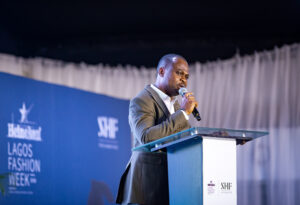
Image Courtesy: Lagos Fashion Week
Phillips highlighted the importance of financial discipline, proper records and standard processes, emphasizing that businesses must be equipped for growth beyond their online visibility.
His advice was direct:
Build a business that not only looks successful online, but is also successful in real life. Keep every single record.
The message is particularly relevant to emerging fashion brands. Creative visibility does not automatically translate into commercial sustainability. Strong operational structures and financial accountability are essential for long-term growth.
Access to Capital: What Does It Take to Scale?
The financial conversation continued with Capital That Fits: Unlocking Tailored Financing for Nigeria’s Fashion Industry.
Moderated by Kemi Ogunleye, Marketing Communications and Brand Strategy Professional, the panel featured Gbolade Okeowo, Director and Fund Manager at Kuramo Capital Management, and Dolapo Adedapo, Creative Specialist and IDCE at the Bank of Industry.
The discussion explored financing opportunities for fashion businesses, highlighting the importance of financial accountability, proper documentation and a clear understanding of business performance.
For an industry with considerable creative potential, access to appropriate capital and investment-ready business structures will be essential to scaling beyond local markets.
On the Runway: Contemporary Expressions of African Design
Day 1 also featured three presentations exploring different approaches to contemporary African fashion.
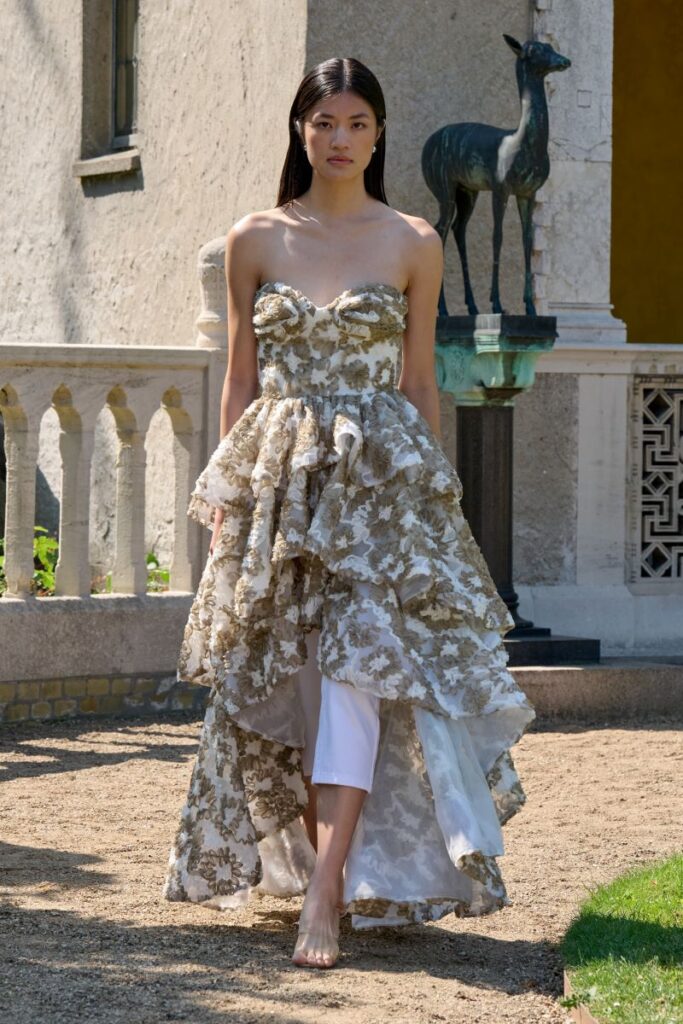
Following Akwete Reimagined, Sisiano presented its Spring/Summer 2027 collection, Some Birds Fly South, featuring sheer fabrics, fringe detailing, relaxed menswear silhouettes and hand-printed fabrics.

Sisiano Spring/Summer 2027 collection, Some Birds Fly South, Image Courtesy: Lagos Fashion Week
Orange Culture presented its Spring/Summer 2027 collection, The In-Between, combining uneven proportions, sheer layering, hand-stitched embellishments and looped-yarn surfaces across a varied color palette.
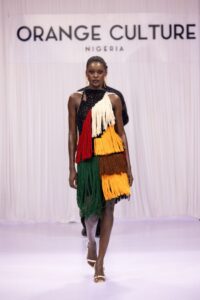
Orange Culture, Spring/Summer 2027 collection, Image Courtesy: Lagos Fashion Week
Together, the presentations reflected the diversity of creative expression emerging from the African fashion landscape, from traditional textile reinterpretation to contemporary experimentation with texture, construction and form.
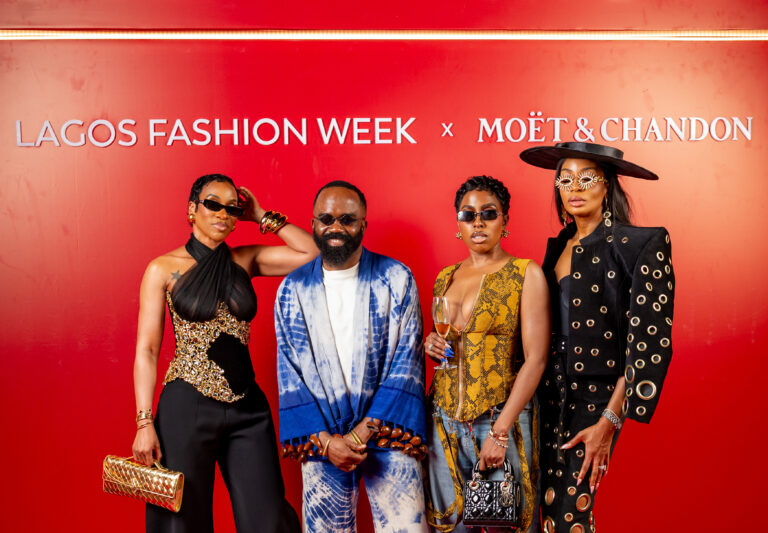
The day concluded with the Heineken Lagos Fashion Week 2026 Welcome Party, hosted by Moët & Chandon, bringing together designers, industry leaders and media.
LuxuryNext Perspective: The Future Must Be Built Beyond the Runway
African fashion draws its strength from its people, cultural heritage and craftsmanship. But keeping these traditions alive means ensuring that the artisans behind them are recognized, valued and able to build a future from their skills. It also means helping fashion businesses grow through stronger relationships, responsible practices and sound business foundations.
As the global luxury industry looks more closely at where products come from and who makes them, African fashion has an opportunity to bring its rich heritage into a new chapter.
The future of African fashion lies not just in celebrating its heritage, but in keeping its people, skills and traditions alive for generations to come.
As Lagos Fashion Week continues under the theme CRAFTED, this is a conversation worth carrying forward.