
There is a lot of discussion around new fibers in fashion. But for a material to really make a difference, it has to move beyond the idea stage and into real products and production.
Nettle Circle is working to do exactly that with HILAYA® Nettle Fiber, bringing Himalayan nettle into existing textile systems while maintaining its connection to the landscapes and communities where it grows.
In this conversation with Cornelia Bamert, Founder & CEO of Nettle Circle AG, we look at how HILAYA® is developing from a Himalayan fiber into a scalable material, the importance of traceability and community partnerships, and the new product applications emerging around it.
We also talk about the latest developments with Cafissi, including HILAYA® Fur, and what its presentation at Milano Unica says about the growing possibilities for nettle fiber in fashion.
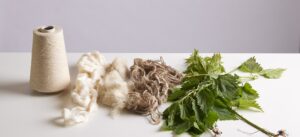
HILAYA® Processing, Image Courtesy: Nettle Circle AG
Q 1. For readers who are completely new to this material, what exactly is nettle fiber, and why is it suddenly gaining such rapid prominence among luxury brands and modern fashion?
Cornelia Bamert, Founder & CEO, Nettle Circle AG:
Textile supply chains face pressure from synthetics, microplastics, regulation and supply volatility. HILAYA® is our nettle-fiber platform: a perennial, low-input and climate-resilient crop base for a local fiber category, designed to work with existing industrial spinning and textile infrastructure.
Q 2. Your nettles grow wildly and are harvested in the remote mountain regions of India, Nepal, and Bhutan. What are the logistical challenges of managing a supply chain in the Himalayas, and how does this controlled harvesting help generate critical income for local communities?
Cornelia Bamert:
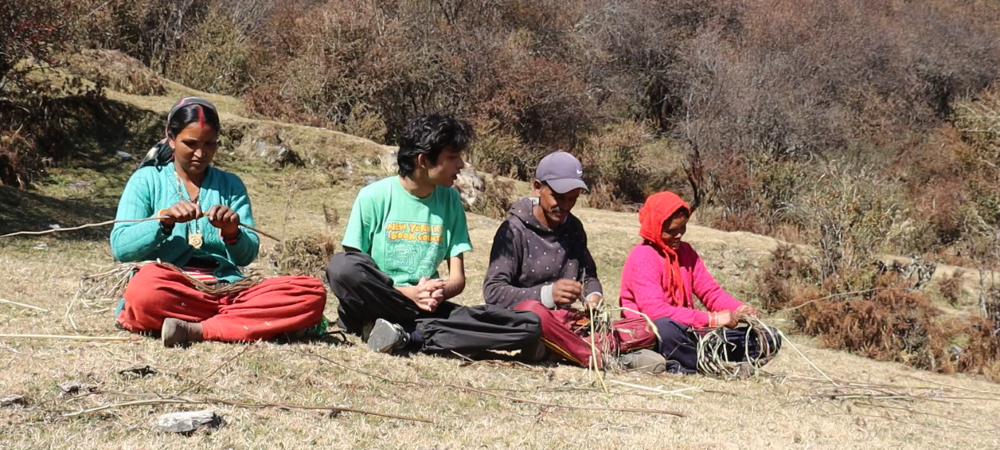
The raw material for our HILAYA® Nettle Fiber grows in steep, remote Himalayan areas, so changing weather, limited roads and many small harvesting groups make logistics challenging. We respond by building simple, local collection routines and working with experienced community partners, so harvesting fits daily life, in organized timing of the year, rather than disrupting it.
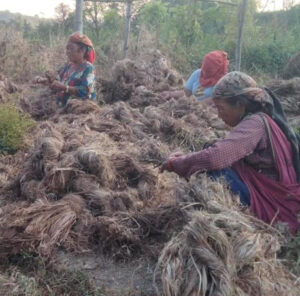
Hilaya Production Nepal, Image Courtesy : Nettle Circle AG
Fair pricing and reliable orders turn wild nettle harvesting into a steady income stream. Meanwhile, our end-to-end traceability system tracks every fiber from harvest to finished product, giving brands total confidence in our quality and impact.
Q 3. You partnered with Haelixa to tag your raw nettle bark with invisible DNA markers right at the source. Why is proof of origin so non-negotiable for luxury fashion houses today, and how does this technology stop greenwashing?
Cornelia Bamert:
Proof of origin has become non-negotiable because luxury houses now have to defend every sustainability and sourcing claim with hard evidence, not just paperwork or storytelling. Physical DNA markers give that evidence: the marker is applied directly to the base material at source, stays through spinning and finishing, and can later be detected in the fiber, yarn or fabric up to final garment/product to confirm that it really comes from Nettle Circle production, the Himalayas and from the communities we work with.
“Because the origin is anchored in the fiber itself, brands get verifiable data instead of promises.”
For us, this is not only about brand trust but also about making supply chains manageable: each batch carries its own “fingerprint”, so lots can be traced and kept clean, which simplifies life for spinning partners and reduces the risk of accidental mixing or mislabeling.
Because the origin is anchored in the fiber itself, brands get verifiable data instead of promises – which supports honest storytelling and makes sustainability claims more robust and future-proof.
Q 4. Can you explain to our readers how the unique Himalayan giant nettle is harvested and processed into your HILAYA® nettle fiber, and why its cultivation is structurally gentler on the planet than organic cotton?
Cornelia Bamert:
Himalayan giant nettle is a perennial plant that villagers carefully harvest by hand, taking only the stem and allowing the roots to stay in the soil so the plant regrows year after year. From there, we use a modern but very low-impact process to clean and prepare the fibers into HILAYA®Nettle Fiber, which spinners can turn into premium yarns and fabrics, using existing Industrial Spinning mills.
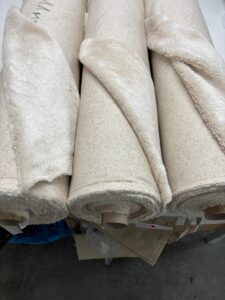
Three types of HILAYA® fur, Image Courtesy: Cafissi
Compared with cotton, nettle grows with rainfall, needs no pesticides or synthetic fertilizer, and helps stabilize soil and biodiversity rather than competing with food crops on irrigated land. That structure – perennial roots, low inputs, and use of existing mountain landscapes and communities – is what makes HILAYA® fundamentally gentler on the planet than even organic cotton.
Q 5. Moving from small, artisanal designer partnerships to controlled scale market production normally requires immense infrastructure. What is Nettle Circle’s primary operational focus as you scale up your supply chain to meet the high-volume fiber demands of major global brands and spinning mills while keeping the balance and reducing waste?
Cornelia Bamert:
Our focus is to scale with real and planned need of our customer, in the way that keeps nettle production close to the landscapes and communities where it grows, rather than building one big central factory. Operationally this means securing reliable partnerships for raw material volumes, standardizing fiber quality so mills can spin HILAYA® like any other premium fiber, and building traceable, well-tested logistics from mountains to mills so we can grow volume without losing transparency or regenerative impact.
“Our focus is to have HILAYA® produced locally by local people, and we’ve built up the expertise to do that in a reliable way.”
With our developed process, we keep production steps near the villages, more people can participate without travelling far or leaving their families for long periods. This makes it possible for working mothers and caregivers to earn an income alongside raising their children – our focus is to have HILAYA® produced locally by local people, and we’ve built up the expertise to do that in a reliable way.
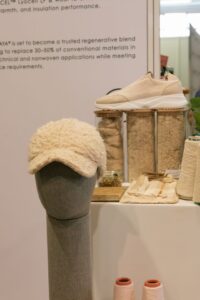
Close-up of HILAYA fur cap, Image Courtesy: Nettle Circle AG
Q 6. HILAYA® is now moving into new product applications. Can you tell us more about the recent fur developments with Cafissi and how HILAYA® is being used in these new materials?
Cornelia Bamert:
Regarding the fur, Cafissi has developed three different fur qualities using our HILAYA® Nettle Fiber: one curly fur and two shorter-hair velour styles.
The fur is made from 50% HILAYA® Nettle Fiber and 50% TENCEL™ Lyocell LF and a blended yarn for the base structure.
The HILAYA® Fur was recently showcased by Cafissi at Milano Unica, highlighting how the fibre is moving from development into new applications for apparel and accessories.
Q 7. You recently showcased Nettle Circle’s growth at the CE Transition Innovation Day in Zurich. What major insights or shifts did you take away from this event regarding how the European circular economy ecosystem is evolving to support next-generation materials?
Cornelia Bamert:
At CE Transition’s Circular Innovation Day we saw how quickly Swiss circular economy ecosystem is moving from “nice ideas” to concrete support structures for next-generation materials – incubators, city programs and investors are now actively looking for fibers that plug into circular supply chains in Europe rather than sit on the fringe.
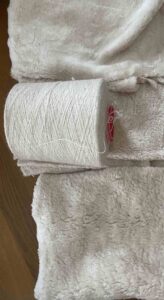
HILAYA Fur Yarn, Image Courtesy : Nettle Circle AG
For Nettle Circle, the clearest shift is that brands and mills no longer ask whether nettle is relevant, but how fast we can scale and what volumes we can reliably deliver: our fifth participation at Future Fabrics Expo, showing HILAYA® Nettle Fiber and new collaboration projects with partners, growing interest from Asian buyers, collaborative projects with European partners – from spinning in Italy, Portugal, Germany, to fabric development and product manufacturing nearby – and testing in several recycling systems together show that real demand, and circular traction for our fiber, is already here.
Q 8. Nettle Circle is actively initiating the first step toward a deeply conscious, regenerative form of luxury. Going forward, how do you see the “soul” of the luxury industry changing, and do you believe this deep commitment to regeneration will become standard for major luxury brands?
Cornelia Bamert:
Over the past few years, the “soul” of luxury has started to move away from status built on animal skins and wildlife-derived materials toward status built on innovative, regenerative luxury fibers and material intelligence.
“What excites us most is that luxury is increasingly about using fewer, better materials – each chosen for their fit and long-term circularity.”
In that context HILAYA® is not trying to replace fiber, but to bring high-performance nettle into luxury and premium products where durability, warmth and tactility matter, and where “right fiber, right purpose” becomes the design principle rather than simply “more exotic.”
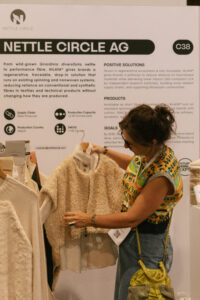
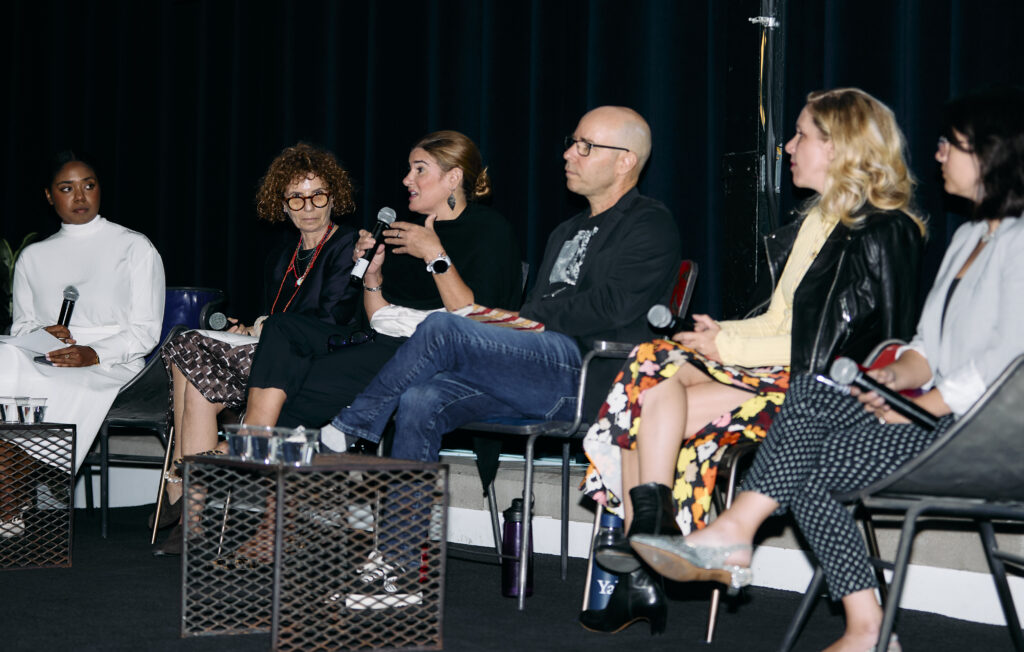
Nettle Circle at FFE 2026, Image Courtesy: Jasmine photos
What excites us most is that luxury is increasingly about using fewer, better materials – each chosen for their fit and long-term circularity – and we believe a deep commitment to regeneration and responsible fiber choice will steadily shift from being a niche positioning to a baseline expectation for major luxury houses.
When luxury moves in this direction, the main market tends to follow, because these brands sit under the greatest scrutiny and pressure – connecting directly back to why next-generation fibers like HILAYA® are needed.
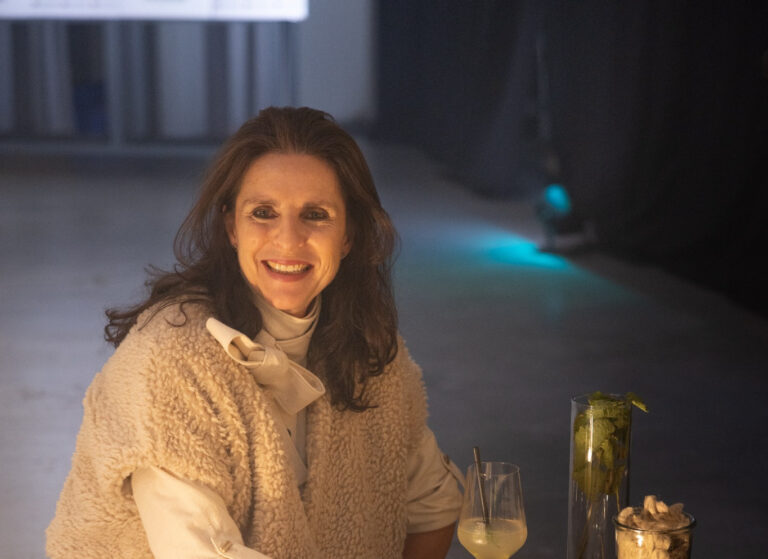
 Feature Image Courtesy: Monique Wittwer