
If Day 1 at Lagos Fashion Week was about the people, skills and craftsmanship behind African fashion, Day 2 turned to another important question: what happens to the value they create?
There was plenty to think about. Intellectual property, overconsumption, the challenges of running a fashion business and the place of traditional craft in contemporary design all came into the conversation. The common thread was the need to build an industry that can protect its creativity and give its businesses room to grow.
A Conversation About Curiosity and Change
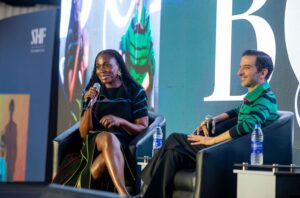
Image Courtesy: Lagos Fashion Week
The day opened with a conversation between Omoyemi Akerele, Founder of Lagos Fashion Week and Style House Files, and Imran Amed, Founder and CEO of The Business of Fashion.
Amed spoke about his move from management consulting into fashion and the journey of building a global fashion business. Curiosity, he reflected, has been central to that journey. It was a simple but fitting way to begin a day that would look at how the fashion industry needs to change and adapt.
From Craft to Commerce: Who Owns the Value?
One of the most important sessions of the day was From Craft to Commerce: Protecting and Commercializing IP in Circular Fashion.
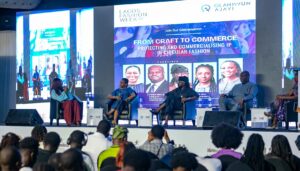
Image Courtesy: Lagos Fashion Week
The panel brought together people from the legal, investment and creative sides of the industry. It was moderated by Busola Bakinson, Managing Counsel at Olaniwun Ajayi LP, with Toyosi Alabi, Partner at the firm; Adekunle Adeniyi, Executive Director of Investments at MBO Capital; Ugo Monye, Founder and Creative Director of Ugo Monye; and Nkwo Onwuka, Founder and Creative Director of NKWO.
The discussion touched on some very practical problems. Unreliable power, limited manufacturing capacity and the need to develop skilled workers continue to affect fashion production. But there is another issue that deserves equal attention: protecting the work itself.
African fashion draws on a rich body of textile traditions, techniques and knowledge passed down through generations. As these influences find their way into contemporary collections and international markets, questions of ownership become harder to ignore.
Who gets credit? Who has the right to use a design or technique? And who benefits when traditional craft becomes commercially valuable?
These are not just legal questions. They matter to the future of the artisans, designers and communities whose knowledge gives African fashion much of its identity. Recognition is important, but it needs to be backed by fair agreements and a real share in the value being created.
The Conversation Around Overconsumption Continues
The Manifesto: The Culture of More, Breaking Up with Overconsumption session returned to a subject LuxuryNext has previously covered.
Moderated by Tobi Idowu, the panel included Oluwadunsin Bolaji of Dunsin Crafts and SachetBank Africa, Tunde Shoremekun of E.S.O by Liman, David Kusi Boye-Doe of BoyeDoe, and Abimbola Ogundairo of Africa Practice.
One point raised during the discussion was the tendency to place the blame for overconsumption on African consumers, while overlooking the much larger global problem of overproduction and the flow of inexpensive imported clothing.
It is a conversation worth having. The fashion industry’s relationship with clothing cannot be reduced to how much people buy. What is produced, how it is made and how long it is used matter just as much.
This is also where the discussion connects with the wider question of value. When clothing is treated as disposable, the materials, labor and skill behind it are easily overlooked.
Building Fashion Businesses That Can Last
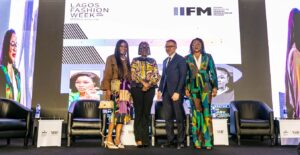
Image Courtesy: Lagos Fashion Week
Another session looked at what happens after the creative idea takes shape. How does a designer build a business that can survive and grow?
Hosted by the Italian Institute of Fashion Management, the session was moderated by Doyin Adelabu. The panel included Nicola Guerini, Director General of IIFM; Dr Belinda Nwosu of Lagos Business School; and Omolade Oshinubi of Fashion Systems Architect.
The speakers looked at business models, management structures, succession and the need to separate creative direction from the everyday running of a company.
It is an important subject, particularly for independent designers. Creative talent may bring a brand to life, but building a business around it takes a different set of skills. Without sound management and a plan for growth, even a promising label can struggle to move forward.
On the Runway: Craft, Culture and New Ways of Thinking
The runway brought a different perspective to some of the day’s conversations. Across the collections, designers drew on cultural references, traditional textiles and new approaches to materials and construction.
Ajanéé’s Masquerading (Cloth as Spirit) stood out for its use of old jerseys, deconstructed and turned into dresses with sheer fabrics. It was an interesting approach to reuse, showing how existing garments can find a new life through design.
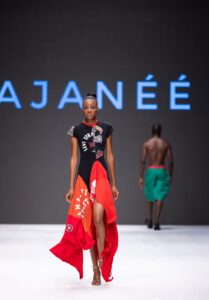
Image Courtesy: Lagos Fashion Week
Dust of the Earth also explored circular design, working with secondhand clothing and textile waste. Its collection, A Letter to Earth, brought together denim, crochet, oversized knits and reworked materials. Rather than treating discarded textiles as waste, the label used them as a starting point for new designs.
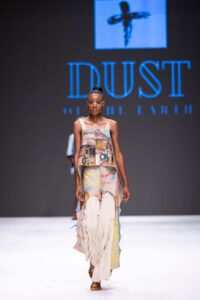
Image Courtesy: Lagos Fashion Week
Bakusoraya from the Benin Republic brought indigenous textiles, embroidery and fringing to the runway. The collection offered a contemporary interpretation of textile heritage, with traditional references finding their place in modern silhouettes.
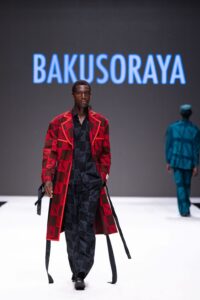
Image Courtesy: Lagos Fashion Week
At Cute-Saint, adire and cowrie embellishments brought traditional elements into the collection, which closed with a masquerade performance. It was a reminder of how closely fashion can be connected to culture, identity and community.
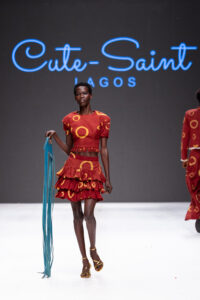
Image Courtesy: Lagos Fashion Week
Christie Brown, the Ghanaian label founded by Aisha Ayensu, made a welcome return to Lagos Fashion Week. The collection moved between soft, flowing pieces and sharper silhouettes, with prints, metallic details and contemporary tailoring. Its presence also brought another perspective on African luxury, one that draws on cultural identity while speaking to an international fashion audience.

Image Courtesy: Lagos Fashion Week
Cynthia Abila’s The Common Ground took a more personal direction. Dedicated to her late father, the presentation brought together traditional drumming, crochet, sculptural accessories and contemporary tailoring. It was a collection with an emotional story at its centre, showing how fashion can carry memories as well as cultural references.
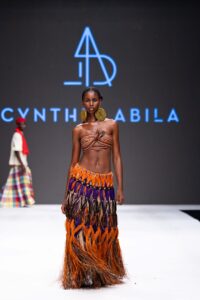
Image Courtesy: Lagos Fashion Week
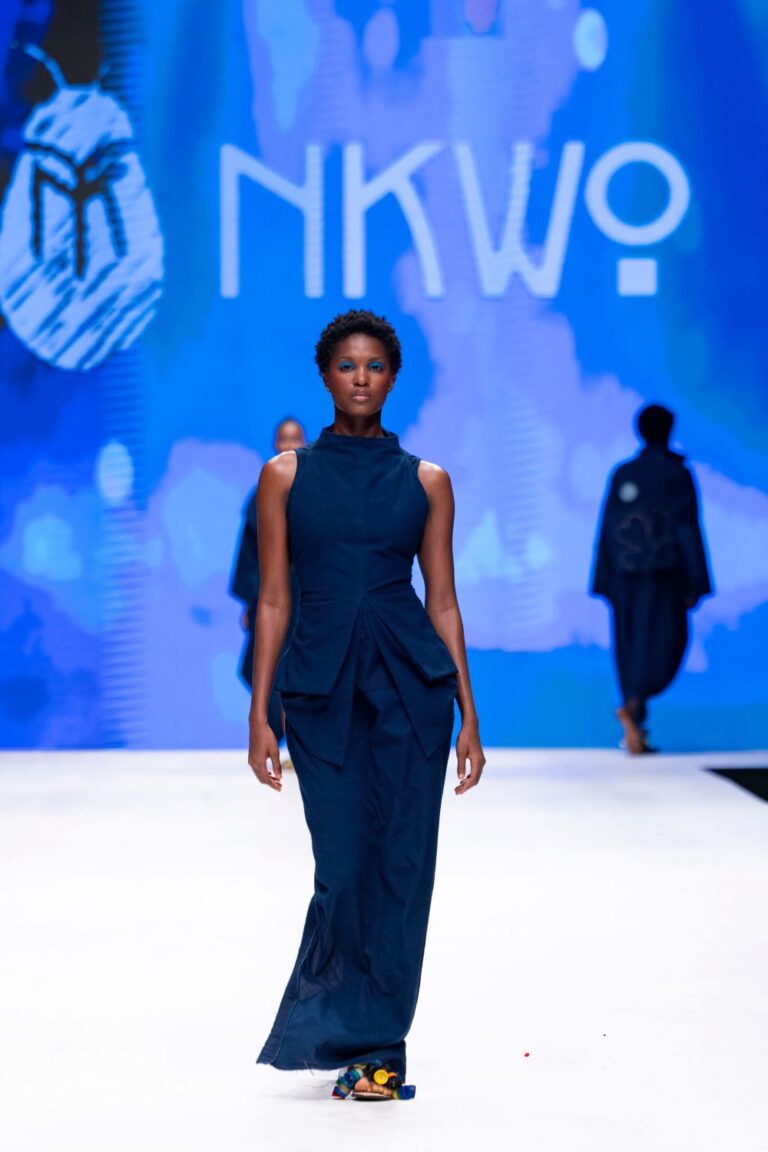
NKWO continued its exploration of sustainable design through denim, intricate knits, fringe and sculptural forms. Its work brought the focus back to material, texture and the possibilities of thoughtful construction.
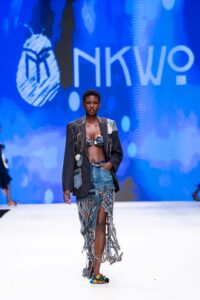
Image Courtesy: Lagos Fashion Week
The collections were varied, and that was part of their appeal. Some looked to traditional craft, others to reuse or personal histories. Together, they showed that African fashion is not defined by a single aesthetic. Its strength lies in the many ways designers interpret their heritage and take it forward.
LuxuryNext Perspective: The Value Must Stay With the People Who Create It
What stayed with us from Day 2 was the question of who benefits from African fashion’s growing recognition.
The industry has extraordinary talent and craft traditions. The challenge is to protect the knowledge behind them, strengthen the businesses that carry them forward and ensure that artisans and communities share in the value they help create. International recognition matters, but lasting progress will depend on whether the people behind African fashion have a meaningful stake in its future.