
Something new is taking shape beneath the streets of Milan.
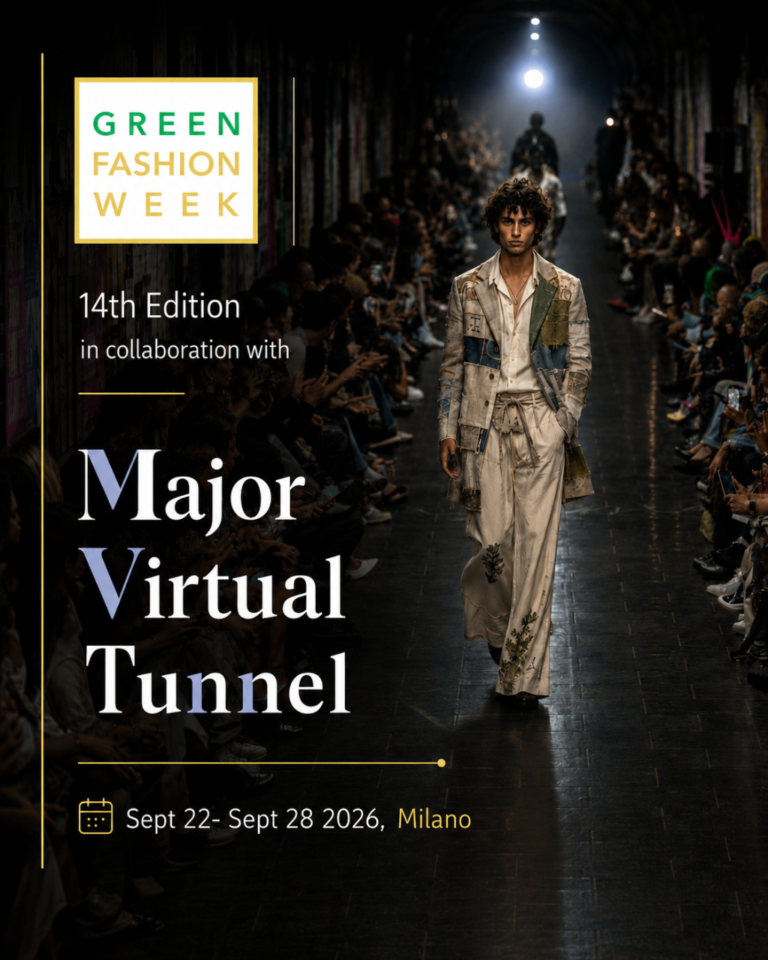
From September 22 to 28, Green Fashion Week will open its 14th edition at the Major Virtual Tunnel, a 250-metre underground space bringing together sustainable fashion, technology, AI and retail.
The space, beneath Piazza De Angeli, was once unused. It has now been redeveloped as a permanent place for brands, creators, technology and the public — with Green Fashion Week as its first major event.
And if you walk into the tunnel, the experience is meant to be rather different from a conventional store.
What if you could discover a brand without walking into a shop?
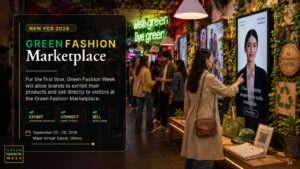
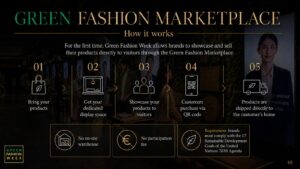
Instead of rows of products and traditional stockrooms, participating brands will have their own phygital spaces.
Visitors will be able to see collections, explore products and find out more about the people and ideas behind the brands. AI-powered VR avatars, digital content and immersive technology will form part of that experience.
If something catches your eye, you can buy it through a QR code. The product is then sent directly to you.
For a visitor, it means being able to discover a collection in a physical space without the product necessarily being physically stocked there.
For smaller and international brands, the idea is to create a presence in Milan without having to take on the cost of a conventional store or maintain inventory on site.
A marketplace with a different feel
Green Fashion Week is also introducing a Green Fashion Marketplace this year, alongside workshops, B2B meetings, networking and other events.
The international line-up includes brands and designers from the United States, Croatia, Spain, Denmark and Sweden, including Prophetik, Krié Design, Raíces, Kromagnon, Victoria Ladefoged, VÄV and Bless by Bless.
There is plenty happening beyond fashion too, with participants from beauty, entertainment, communication, technology and sustainable services.
Social media and creators will also have a place in the program, with a dedicated station and workshops exploring social commerce, the creator economy and digital retail.
For visitors, that means the tunnel isn’t simply somewhere to look at clothes. It is being designed as a place to meet brands, discover ideas and see how technology is changing the way we shop.
But can it really be more sustainable?
The organisers say the model is intended to reduce physical infrastructure and stock, while making retail more accessible to brands.
There is another side to consider.
A product still has to be made, packaged and delivered. It may also have to travel back if it is returned. So removing a stockroom doesn’t automatically make the entire retail journey sustainable.
What the Major Virtual Tunnel does offer is a chance to look at another part of the sustainability conversation: how fashion is sold.
We talk a lot about better materials, production and supply chains. But what happens between the finished product and the person buying it matters too.
And the tunnel is meant to stay
Green Fashion Week is the first major event at the Major Virtual Tunnel, but it won’t be the last.
The space is designed to operate throughout the year, with permanent phygital stations for more than 100 brands, alongside events, content, networking and new brand experiences.
For Mikel Guido Dolci, Co-Founder of Green Fashion Week and CEO of Major Virtual Tunnel, the aim is to rethink traditional retail by using less physical stock and infrastructure and putting more emphasis on technology, content and the connection between brands and customers.
For someone walking through the tunnel, the idea is simple: discover something in the real world, interact with it digitally, and decide what you want to take home.
Whether that can become a genuinely different way of doing fashion retail remains to be seen.
But when Green Fashion Week opens the doors on September 22, visitors will get their first chance to experience it for themselves.
LuxuryNext will be following how it develops.