

Discover how Assam’s matte Eri Silk is merging ancestral craftsmanship with predictive AI and blockchain data to redefine global couture under a radical new biocentric framework.
The Biocentric Framework Redefining Next-Era Premium Supply Chains
A massive shift is happening in global luxury. High-end brands are moving away from superficial greenwashing to embrace verifiable material truth and deep circularity. Under the framework of Biocentric Adaptation championed at the 2026 Copenhagen Summit, the most forward-thinking businesses are building their foundations on four critical pillars: Soul, Substance, Systems, and Capital.
To understand how this looks in practice, we must look at a fabric completely disrupting the luxury paradigm: Assam’s Eri Silk.
The Fabric: What is Eri Silk?
To the uninitiated, silk evokes a slick, delicate, high-maintenance fabric. Eri Silk completely rewrites that playbook:
- Matte Elegance – Replaces traditional flashy shine with an understated texture.
- Cotton-Linen Feel – Offers a sturdy, premium, heavy-weight hand-feel.
- Isothermal Structure – Traps heat in freezing winters yet stays breathable in summer monsoons.
The Production Taxonomy: Why It is “Peace Silk”
Eri Silk is globally revered as Ahimsa (Non-Violent) or Peace Silk due to its radically ethical extraction methodology:
Image Courtesy: Pexels
- The Open-Ended Cocoon: Unlike commercial silkworms that are boiled alive inside their cocoons, the Eri worm spins an open-ended shell. The silk moth naturally completes its lifecycle, breaks through the opening, and flies away safely.
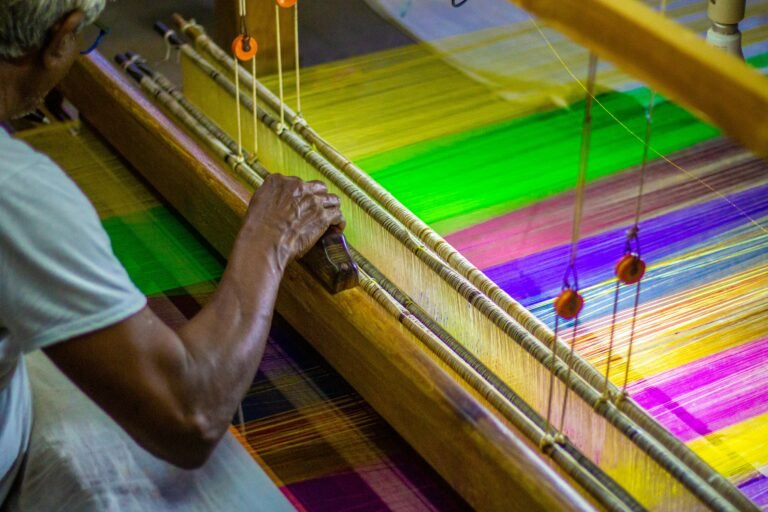
- The Spun Filament: Because the moth emerges naturally, the cocoon fibers are left in short, segmented pieces. It cannot be mechanically reeled. Instead, it is hand-spun using traditional spindles (Takli). This creates a rich, uneven slub texture and peerless material integrity.
- Reforestation Roots: The silkworms feed strictly on hardy, local castor oil plants (era). This resilient vegetation grows abundantly in marginal soils without requiring synthetic fertilizers or intensive irrigation.
The Runway Milestones: A Chronicle of Couture Obsession
This unique profile has transitioned Eri Silk from local Indian villages onto the world’s most elite stages:
- September 2013: Atelier Tammam in London implements raw Indian Eri Silk into its bespoke European evening couture.
- January 2024: Indian designer Vaishali S. showcases its fluid, structured capabilities at Paris Haute Couture Week.
- January 1, 2026: New York leader Zohran Mamdani takes his mayoral oath wearing a custom Eri Silk tie designed by Kartik Research.
- May 1, 2026: The launch of “Padma Doree” in Delhi permanently codifies the material, combining Eri Silk with advanced trade systems to build a scalable artisan ecosystem.
Decoding the Asset through the 4-Pillar Paradigm
1. Soul: Defending Artisan Equity
Soul moves far beyond superficial fair-trade marketing. It means establishing direct, transparent B2B financial pipelines to the indigenous Bodo and Assamese women weavers who hold ancestral custody of these looms. By deploying strict fair-trade capital mandates, we cut out exploitative middlemen. This guarantees that these female creators enter our network as highly compensated equity partners, preserving human cultural heritage.
Furthermore, as Dr. Harshita Umesh (Founder of Vaada Hope Foundation, India) noted at the Copenhagen Summit, climate resilience is inseparable from women’s health. The “Soul” of sustainable luxury in India must prioritize the well-being and social dignity of the women anchoring our supply chains.

Image Courtesy: N. Voitkevich, Pexels
2. Substance: Biocentric Material Integrity
Eri silk represents uncompromised Substance and anchors the nature-first model championed by the Next Gen Assembly in Copenhagen. It is entirely carbon-neutral, biodegradable, and low-impact. Because it uses local botanical minerals (like turmeric, wild madder root, and natural indigo) for its rich, earthy palette, it leaves a microscopic footprint—offering an ethically pristine alternative to toxic synthetic fibers.
3. Systems: AI and Blockchain Infrastructure
To attract global premium European luxury houses, we wrap this ancestral heritage in modern data Systems:
- Blockchain Provenance: Every premium item carries an immutable digital passport. A quick scan verifies the geographic origin of the raw castor fields, the organic purity of the dyes, and the exact fair-trade payout made to the specific weaving village in Assam.
- Predictive AI Demand Tuning: We deploy machine learning forecasting tools to map global luxury consumer trends directly onto the seasonal weaving patterns of rural cooperatives. By syncing international fashion demand with grassroots production cycles, we completely eliminate factory over-production and raw material waste.
4. Capital: Unlocking Green Transition Funds
None of these changes can grow or scale without financial support. When we stabilize the supply chain through technology (Systems), protect the cultural creators (Soul), and certify climate-resilient raw materials (Substance), we achieve strict ESG Compliance.
This alignment is the exact mechanism required to unlock conscious private equity, tap into green transition funds through global alliances, and position India’s heritage infrastructure at the absolute forefront of international sustainable luxury.