
The global luxury market is undergoing a structural transformation. For decades, the premium fashion sector relied on a linear take–make–waste model, mistaking virgin, resource-heavy raw materials for quality and exclusivity. Today, true luxury demands absolute systemic accountability. Brands such as Doodlage are dismantling this paradigm, proving that design innovation does not require virgin inputs—it requires the creative intelligence to reconstruct what already exists.
The Genesis of a Circular Vision
The brand was born out of a direct confrontation with industrial waste. While interning at major garment export houses, founder Kriti Tula witnessed the staggering environmental toll of high fashion firsthand. Appalled by data showing that traditional factories routinely discard up to 25% of their raw textiles directly from the cutting floor, she refused to be another cog in the fast-fashion grid. In 2012, she launched Doodlage to build an ethical alternative—a high-end design house founded entirely on the principles of circularity, waste interception, and design-led responsibility.
Intercepting the Industrial Stream
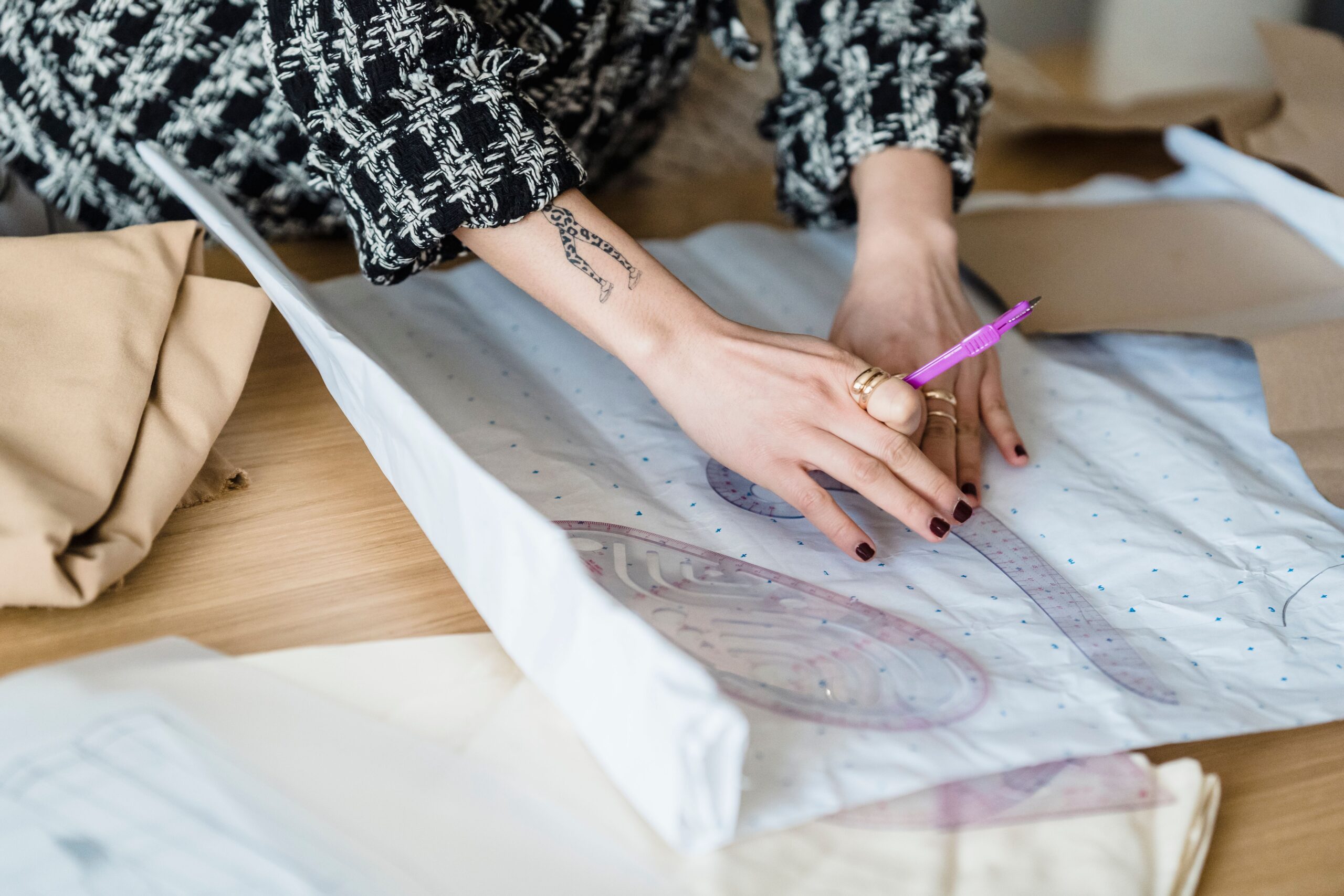
At its core, Doodlage operates a closed-loop design ecosystem that actively intercepts industrial textile waste before it reaches landfills. By sourcing post-cutting scraps, deadstock fabrics, and end-of-the-bolt remnants from export houses around Delhi, the brand transforms manufacturing excess into premium garments. This is not casual downcycling; it is a calculated, commercially viable model for sustainable design—one that optimizes raw-resource efficiency while preserving material integrity, craftsmanship, and aesthetic value.
Why Every Collection Is Entirely Unique
This dependence on industrial waste streams fundamentally reshapes the design architecture of each collection. Where traditional fashion houses prioritize absolute standardization, Doodlage rejects replication altogether. Fragmented, irregular fabric inputs make mass duplication impossible—turning every garment into a limited-edition asset.
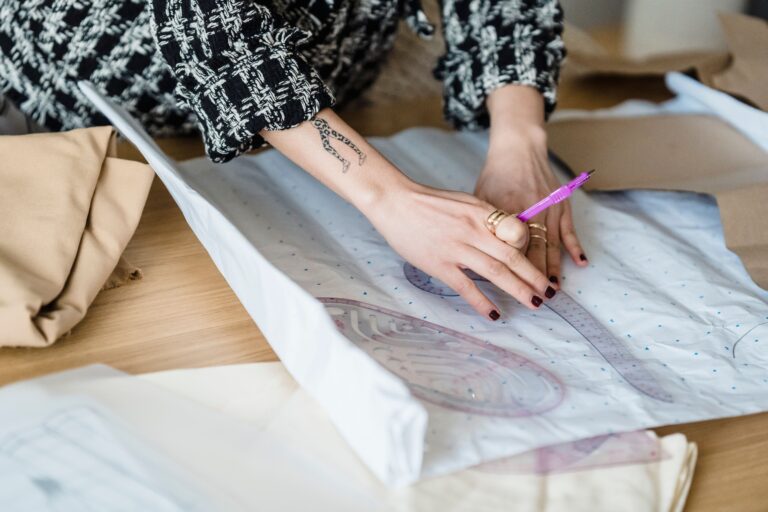
To resolve challenges unique to each textile fragment, artisans design custom “doodles”—structural embroidery or stitching interventions—at the sampling stage. Final placement is determined during assembly, allowing the maker’s intuition to guide the outcome. The result is a living design ecosystem in which no two garments are identical, and variation itself becomes a marker of value.
The Realities of Circular Scaling
Upcycling is often misunderstood as a small-scale craft practice, but its infrastructure demands intense logistical precision. Sorting, cleaning, grading, and patchworking fragmented textiles into consistent, high-quality production runs is a complex manufacturing challenge. Doodlage’s success lies in its ability to standardize the irregular—building scalable frameworks that translate waste variability into reliable luxury output. As global circular-economy compliance tightens, this operational intelligence sets a powerful benchmark for the South Asian fashion landscape.
From Circular to Regenerative Luxury
What ultimately distinguishes Doodlage is its shift from sustainability as mitigation to sustainability as creation. Regenerative luxury is not about merely reducing harm; it is about designing systems that actively reclaim value from loss. By treating waste as a primary raw material rather than a by-product, the brand reframes scarcity itself as a creative constraint—forcing design intelligence, craftsmanship, and system thinking to replace excess.
This approach elevates Indian design beyond cost competitiveness or artisanal nostalgia. Instead, it positions regeneration as a new form of cultural capital: garments that carry provenance not just of craft, but of conscience, foresight, and structural innovation.
The Future of Premium Design
As consumers and enterprise buyers move away from surface-level sustainability claims, the future of luxury will be defined by regenerative footprints and supply-chain integrity. By proving that high fashion can be built entirely from an industrial waste stream, Doodlage shifts the narrative from eco-efficiency as a marketing layer to regeneration as a foundational design philosophy.
In this new architecture of luxury, value is no longer extracted—it is recovered, redesigned, and renewed.