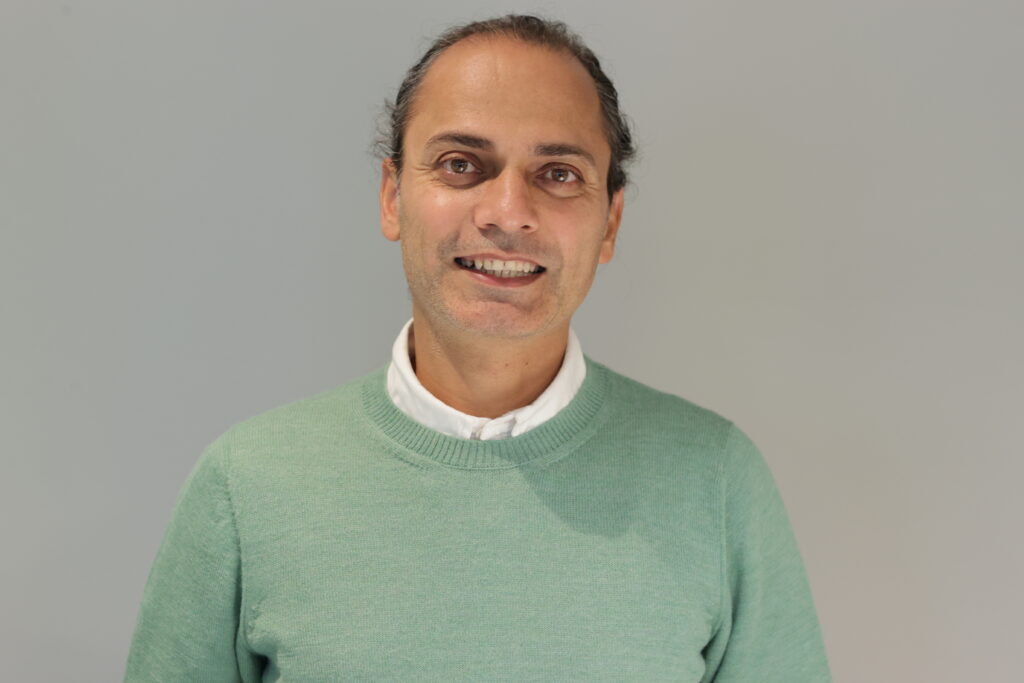


As sustainability moves from a specialist function into the core of business strategy, fashion and luxury companies are facing a different set of questions: how to turn ESG data into better decisions, how AI can improve supply-chain visibility and demand planning, and how emerging innovations can move from pilots into the mainstream.
In this conversation with LuxuryNext, Charisma Glassman, VP, Global Head of Strategy and AI Transformations, Retail and CPG explores what this shift means for business leaders, from integrating sustainability into everyday decision-making to using technology more intelligently and creating the conditions for new ideas to scale.

Charisma Glassman with CIO Tapestry Yang Lu
Q1. ESG has moved from being a specialist topic to a boardroom conversation. What is the biggest change you’ve seen in the way fashion and luxury companies approach it today?
Charisma Glassman:
The biggest change is that ESG has moved out of the annual report and into the profit and loss statement. For years it lived with a small, sincere team who produced a beautiful document once a year, and the rest of the business carried on largely undisturbed by it. Today the people asking the questions are the CFO, the chief supply chain officer and the head of procurement, and they are asking because the answers now affect cost, access and valuation.
Sustainability has quietly become a condition of market access rather than a campaign.
Regulation did a great deal of that work. Once disclosure became mandatory and auditable, sustainability stopped being a narrative exercise and became something closer to accounting, with all the discipline that implies. At the same time the questions became far more specific. Nobody senior asks whether a brand is sustainable anymore. They ask where the fiber was grown, who dyed it, what that consumed and whether the company can prove it.
What I would say to leaders is that this is not a reporting burden dressed up as strategy. Sustainability has quietly become a condition of market access rather than a campaign, and the companies still treating it as a communications topic are building on sand.
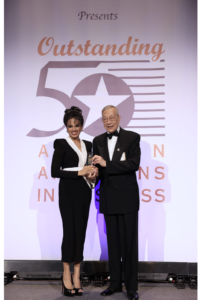
Charisma Glassman awarded Outstanding Asian Americans in Business 2025
Q 2. AI is changing the way businesses work at an incredible pace. Where do you think it will have the biggest impact on ESG, supply chains and sustainability over the next few years?
Charisma Glassman:
The obvious answer is reporting, and I think the obvious answer is the least interesting one. The genuine impact will be in visibility below the first tier of the supply chain, which is where most of a fashion company’s real footprint sits and where almost nobody has reliable information. Reconciling supplier declarations, audit reports, certificates, shipping records and customs data has always been possible in theory and impossibly slow in practice. That is precisely the kind of work machines are good at, and it turns traceability from a project into a capability.
The second area, and the one I would push hardest on, is demand. Overproduction is the largest sustainability problem in this industry, and it is not a materials problem or a chemistry problem. It is a forecasting, assortment and merchandising problem. Better prediction of what will actually sell, in what size curve and in what market, reduces waste, markdown and inventory at the same time, which is one of the few places where the commercial case and the environmental case point in exactly the same direction.
Overproduction is the largest sustainability problem in this industry.
I would add one caution. An AI system that produces a confident number nobody can defend is worse than having no number, particularly when that number ends up in an audited disclosure. Speed without trust is a fragile strategy, so the governance has to be designed at the same moment as the deployment, not bolted on afterwards.

Charisma-Glassman-teaching-at-ESSEC-Parsons-Emilux-Program
Q 3. Fashion companies are collecting more ESG data than ever before. How can leaders turn that information into better decisions instead of simply producing more reports?
Charisma Glassman:
By instrumenting the decision rather than the disclosure. Most ESG data today is gathered backwards, in arrears, for an audience of regulators and analysts. It arrives months after every decision it might have influenced has already been made. Information that reaches you after the order is placed is documentation, not intelligence.
The practical discipline I recommend is simple and quite hard to do. Take each measure you collect and name the decision it is meant to change, the person accountable for that decision and the moment in the calendar when they make it. Anything that fails that test is a reporting obligation, and you should treat it as one, resource it modestly and stop pretending it is strategy. What remains is a much shorter list, and that list belongs in front of the buyer choosing a mill, the planner setting a buy quantity and the designer selecting a fabric, at the moment they are choosing.
Information that reaches you after the order is placed is documentation, not intelligence.
The other change is structural. ESG data should be reviewed in the same meeting as commercial performance, by the same people, on the same cadence. The moment it has its own separate forum, it becomes a parallel conversation that nobody in the core business is obliged to act on.
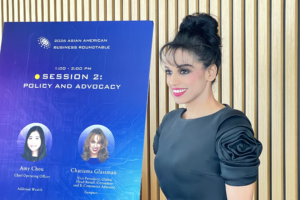
Charsima-Glassman-on-AI-Policy-and-Advocacy
Q 4. Many luxury fashion businesses still see sustainability as a compliance exercise. In your view, where are the biggest opportunities for companies that make it part of their overall business strategy?
Charisma Glassman:
I have long argued that sustainability is the ultimate luxury, and I mean that commercially rather than sentimentally. Luxury has always sold permanence, provenance and craft. It sold the idea that an object was made properly, by someone who knew how, from something worth keeping. That is a sustainability proposition in everything but name, and the houses that recognize this are not adding a new value to their brand, they are reclaiming an old one. The concrete opportunities follow from that. There is pricing power and durability of brand equity with a client base that increasingly asks harder questions. There is real margin in producing less and discounting less.
There is a genuine business in repair, care and resale, which extends the life of the product, deepens the relationship with the client and generates first party data that most luxury brands lack. There is supply security, which matters more each year as climate volatility affects cotton, cashmere, leather and the water and energy that sit behind all of them. And there is talent, because the people you most want to hire are asking about this in interviews.
The compliance-only approach is the worst of both worlds. You spend the money, you carry the reporting cost and you capture none of the return.
Q 5. At LuxuryNext, we’ve been speaking with people working in regenerative farming, next-generation materials and circular fashion. What role do you think leadership plays in helping these innovations move into the mainstream?
Charisma Glassman:
An enormous one, and it is less glamorous than people expect. These innovations very rarely fail on science. They fail on volume and on time horizon. A regenerative farm needs several seasons before the soil and the yield respond. A next generation material needs committed offtake before anyone will finance a plant. Circular models need scale before the unit economics stop looking unfavorable. Every one of those is a leadership decision about patience and capital, not a technical decision about chemistry.
A next generation material needs committed offtake before anyone will finance a plant.
So the most useful thing a leader can do is sign a long term commitment and then protect it through the cycle. Guaranteed volume over several years is worth more to an innovator than any pilot, any accelerator program and certainly any award. Accepting a higher unit cost during the scaling period is part of the deal, and the leaders who succeed here are the ones who defend that budget line when the quarter is difficult, because that is exactly when these commitments get quietly withdrawn.
Two other things matter. Put the innovation into a product that the house actually cares about rather than a small capsule at the edge of the collection, because that is what forces the organization to make it work. And give ownership to someone with commercial authority. Innovation parked in a lab with no route to the main line stays in the lab.
Q 6. Looking ahead, what advice would you give business leaders who want to build organizations that are both commercially successful and genuinely sustainable?
Charisma Glassman:
Put it in the operating model and the incentives, or accept that you have not really decided. Strategy is what gets funded, measured and rewarded, and everything else is intention. If no one’s objectives change, nothing changes.
The companies that will still be admired in a decade are not the ones with the most eloquent commitments. They are the ones that made sustainability part of how they make money, rather than part of what they say about themselves.
Then be ruthless about focus. Choose a small number of commitments you can genuinely deliver and describe them precisely, rather than a long list of ambitions that reads well and obliges no one. I would far rather see a company do three difficult things properly than announce twelve.
Be honest about the trade-offs, internally and externally. There are real tensions between cost, speed, growth and impact, and pretending otherwise erodes trust inside the organization faster than any external criticism ever could. People know when they are being asked to hit two contradictory targets.
Build the capability inside your own teams rather than renting it permanently. Advisers, including my own profession, are useful for direction and for pace, but the judgment has to end up living with your buyers, your planners and your designers, because they are the ones making the decisions that matter.
Finally, treat this as a continuous loop rather than a plan. Write down the assumptions you are betting on, revisit them honestly and change course when the evidence says you should. The companies that will still be admired in a decade are not the ones with the most eloquent commitments. They are the ones that made sustainability part of how they make money, rather than part of what they say about themselves.