
By Day 3, the conversations at Lagos Fashion Week had moved beyond the runway. There was more attention on what it takes to build a fashion business, where sustainable brands can find the support they need, and how traditional skills and materials can continue to find a place in contemporary fashion.
These questions came through in the day’s discussions as well as in the collections presented on the runway.
Financing a Sustainable African Fashion Industry
One of the more important discussions of the day was Off the Runway: Financing a Sustainable African Fashion Industry in a Changing Climate.
Moderated by Yinka Adegoke, Fashion Business Editor and Journalist, the panel included Yewande Giwa, Senior Country Officer and Value Chain Lead at the International Finance Corporation (IFC); Zara Odu, Sustainable Fashion and Brand Development Specialist; and Timoni Akindolie, Head of Investor Relations at AFC Capital Partners.
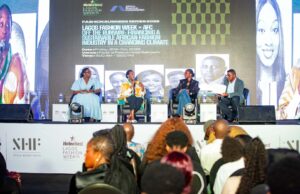
Image Courtesy: Lagos Fashion Week
The discussion addressed a familiar problem for many independent fashion businesses. There is no shortage of creative talent, but turning that talent into a business that can grow is another matter.
Brands need access to finance, practical business advice and the infrastructure to support production. The panel identified three areas that need attention: advisory and capacity building, investment and access to capital, and stronger regulatory and intellectual property frameworks.
For sustainable fashion businesses, these are not small concerns. A brand may have a strong idea, responsible materials and a clear market opportunity, but without the right financial and business support, growth can be difficult.
It was a useful reminder that the future of African fashion will depend not only on the designers creating new work, but also on the investment and support available to help them build lasting businesses.
Regenerative Collaboration: More Than a Product
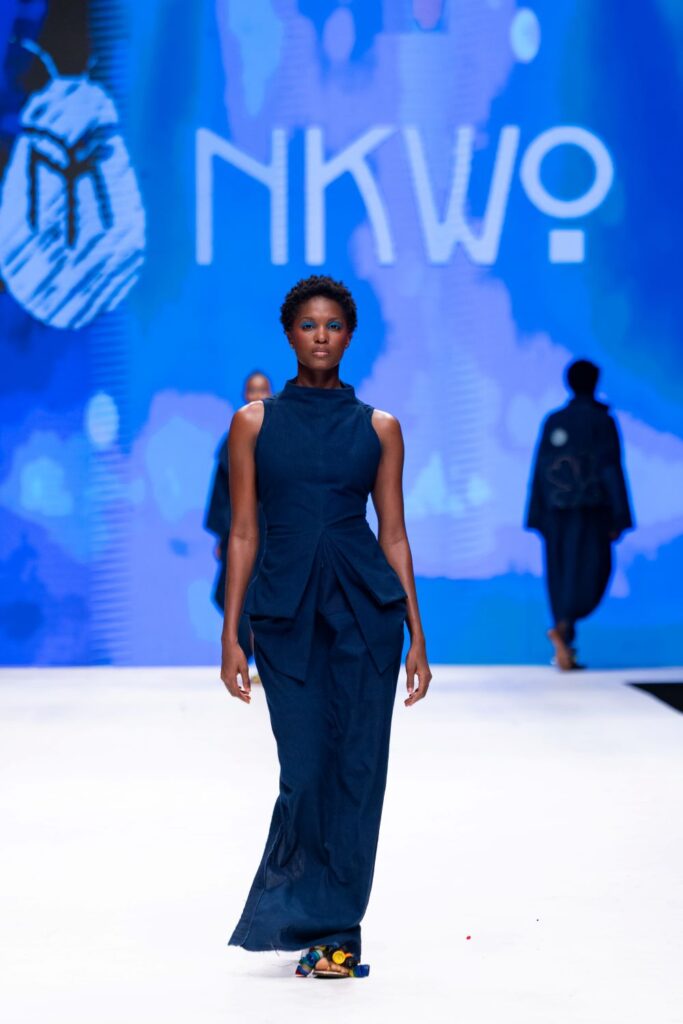
Another conversation brought Nigerian designer Nkwo Onwuka together with Beatrice Oola, Creative Strategist and Founder of Fashion African Now.
Their session, Regenerative Collaboration: What If Fashion Was About More Than Just a Product?, looked at their long-standing friendship and business partnership through the ONU shoe project.
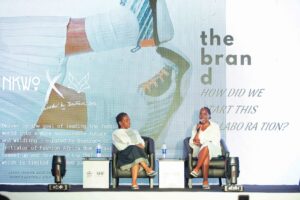
Image Courtesy: Lagos Fashion Week
The project is rooted in an African circular model, but the discussion went beyond the product itself. It explored what can happen when creative people work together over time, bringing different ideas and experience to a shared project.
There is something important in this approach. Regenerative fashion is often discussed in terms of materials, production and waste. But the relationships behind a product matter too. Long-term partnerships, shared knowledge and opportunities for creative exchange can all play a part in building a more thoughtful fashion industry.
Heritage and Identity on the Runway
The runway offered several examples of designers bringing cultural references, indigenous materials and traditional skills into contemporary fashion.
Pepperow continued its work with hand-printed fabrics, using floral motifs, beaded embellishments and raffia details. The collection also included relaxed menswear, keeping to the brand’s minimal approach.
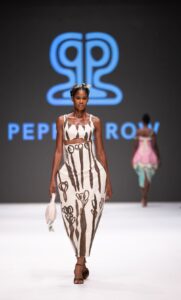
Image Courtesy: Lagos Fashion Week
Uganda-based IGC Fashion brought barkcloth and cowrie embellishments into its collection. Barkcloth has a long history in Uganda, and its use in contemporary fashion offers an interesting example of how a traditional material can continue to be part of a living design culture.
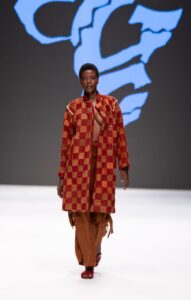
Image Courtesy: Lagos Fashion Week
Dukun made its Lagos Fashion Week debut with a collection inspired by the Itsekiri traditions of southern Nigeria. Through deconstruction, fabric manipulation and layered silhouettes, the designer brought these cultural references into a very different setting.
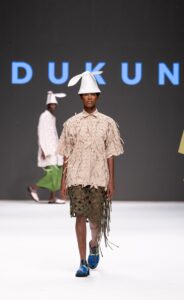
Image Courtesy: Lagos Fashion Week
Studio Imo’s collection, Clan, was developed in collaboration with two crochet brands, 21 Wool Street and Crochet Nigeria. Textured knitwear, crochet details, asymmetrical shapes and fringe gave the collection its character. The collaboration also brought attention to the skills of specialist crochet makers and the possibilities of working with them in contemporary fashion.
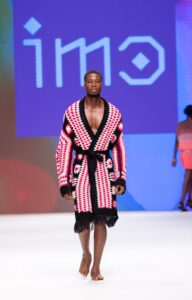
Image Courtesy: Lagos Fashion Week
The Irapada circular design initiative featured work from Hertunba, Iamisigo, Ajanéé and Eki Kere. Its presence offered another perspective on how designers can approach reuse and circularity through a collective platform.
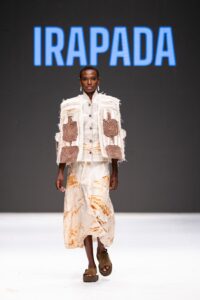
Image Courtesy: Lagos Fashion Week
Other collections brought their own interpretations of heritage and identity. Jermaine Bleu worked with Ghanaian kente fabrics, while Imad Eduso’s Into The Wild introduced its first menswear presentation, with raffia hats, fringed pieces and the label’s signature womenswear silhouettes.
What made these presentations interesting was the variety of approaches. Some designers worked directly with traditional textiles, others reinterpreted cultural references through shape, construction and detail. Heritage was not being treated as something to simply preserve in its original form. It was finding new expression through design.
Fashion, Influence and Consumer Trust
Day 3 also included a discussion on the role of influencers and fashion tastemakers in shaping how consumers discover and engage with style.
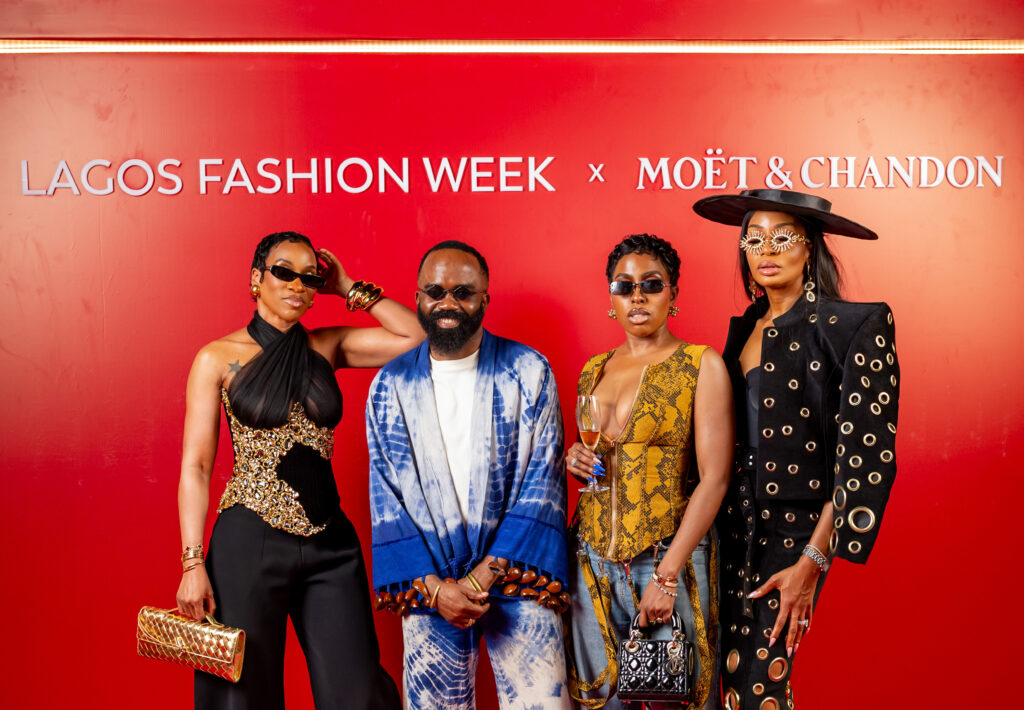
Moderated by Somi Nwandu, the session featured Kiky Festus and Monica Awe-Etuk. The conversation touched on personal style, well-made clothing and the value of buying pieces that can be worn for longer rather than following every new trend.
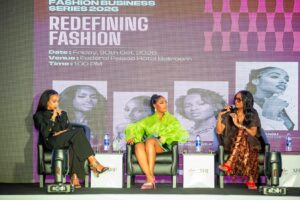
Image Courtesy: Lagos Fashion Week
There was also a useful discussion around trust between creators and brands. Kiky Festus highlighted the importance of turning down partnerships that do not feel authentic to the creator’s audience. Brands, too, need to allow creators some freedom in how they communicate.
As influencer marketing becomes a bigger part of the fashion business, the relationship between commercial partnerships and audience trust deserves more attention.
Recognition for Omoyemi Akerele
Away from the runway, Lagos Fashion Week also received recognition for the work behind the platform.
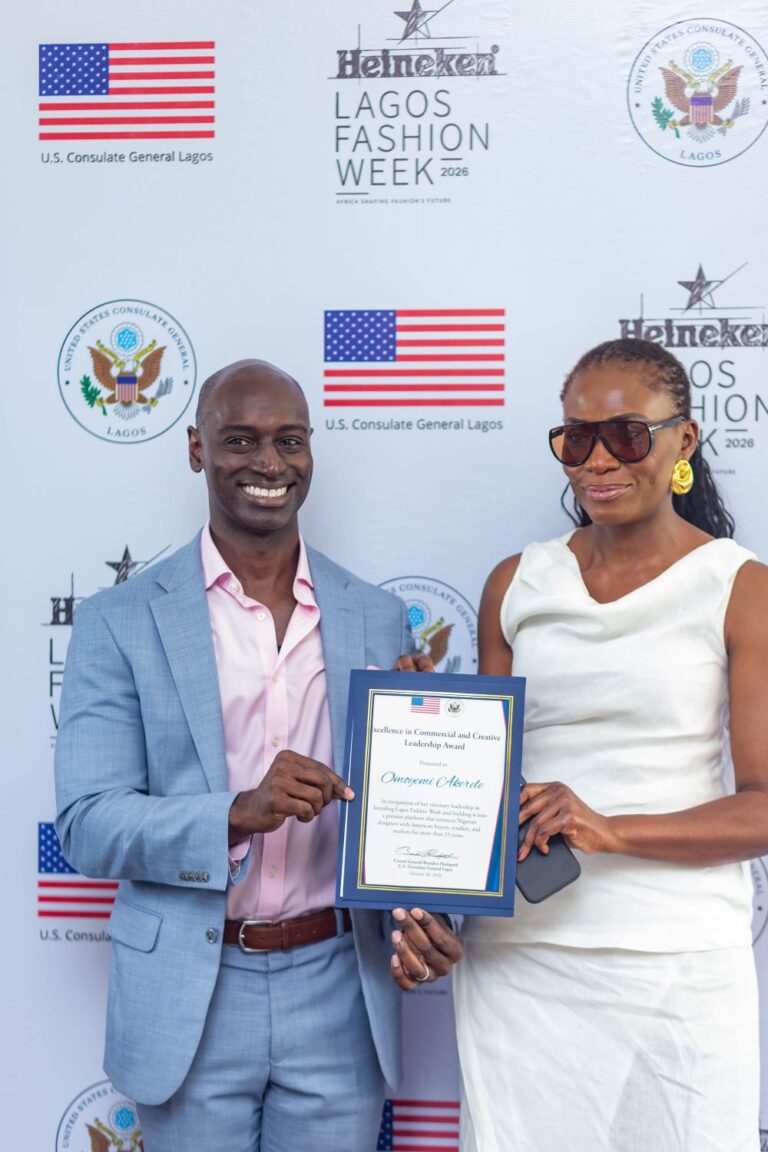
U.S. Consul General Brandon Hudspeth hosted a gathering in celebration of Lagos Fashion Week, bringing together designers, industry stakeholders and creative leaders.
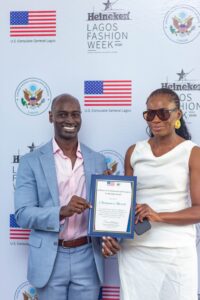
Image Courtesy: Lagos Fashion Week
During the event, Omoyemi Akerele, Founder and CEO of Lagos Fashion Week, received the Excellence in Commercial and Creative Leadership Award from Hudspeth.
The award recognized her work in building Lagos Fashion Week over the past 15 years into a platform that connects Nigerian designers with international buyers, retailers and markets.
It was a significant moment for Akerele and for the wider fashion community that has grown around the event. Building a platform of this kind takes years of work, relationships and persistence. Its growing international recognition reflects that effort.
LuxuryNext Perspective: What Comes Next?
Across the third day, one point kept coming through: creative talent needs the right support around it.
Designers need access to finance and stronger business networks. Craft skills and traditional materials need to remain part of the industry, not just as sources of inspiration but as valuable knowledge that deserves recognition. And collaborations need to create opportunities for the people involved, not simply produce another collection or product.
The runway showed the range of ideas and influences coming from African designers. The discussions raised the practical questions of how to support them.
That is where the next stage of African fashion will be shaped: in the businesses being built, the partnerships being formed and the traditions that continue to be carried forward.