
Image Courtesy: Simon Berger, Pexels
Brunello Cucinelli, a man who defines his success by the dignity of the people who make his clothes, has turned his eyes towards Ladakh. A unified vision of His Majesty King Charles III and Brunello Cucinelli, led to the formation of Himalayan Regenerative Fashion Living Lab in Ladakh.
The Mission
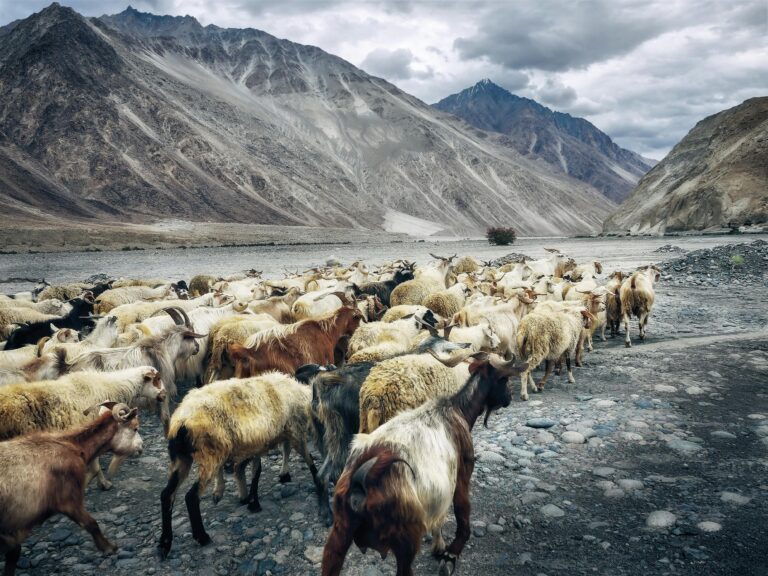
The lab supports the nomadic Changpa herders, providing them with the tools and fodder security needed to protect their ancient bond with the Changra goat. It uses satellite mapping and AI-driven soil sensors to help the nomadic Changpa herders restore their degraded grasslands. By ensuring “Fodder Security” for the Changra goats, the project protects an ancient way of life while producing the rarest, most ethical pashmina on Earth.
Cucinelli’s entire approach to this project and to his business, is summarized in his most famous belief:
“The objective of my life has been to give work a moral and economic dignity. We must be the guardians, not the owners, of everything we have.” — Brunello Cucinelli
This isn’t a charity project but it’s way to restore a way of life. By focusing on restoring the pastures of Ladakh, the lab ensures that the rarest pashmina in the world is a product of a thriving ecosystem, not a depleted one

Image Courtesy: Shalendra Kumar, Pexels – For editorial commentary on the evolution of Pashmina value chains in Ladakh.
In early 2026, the first limited-edition Himalayan Cashmere scarves were showcased in Cucinelli’s global boutiques. They aren’t just a fashion product but they are proof that the highest luxury is a restored landscape. It tells a unique story about how the product was created and the new luxury consumer is ready to pay for this regenerative way of creating luxury.
As we look at the future of Indian retail, the Ladakh Lab stands as a beacon. It shows that now in the world of luxury, when the artisan, the land and the whole production process in treated with respect, the world notices – and the market rewards it too.