
An interview with Kevin Kuhlow, Co-founder of PINA&KAKAW
What if agricultural waste could become the starting point for a new textile value chain? In Guatemala, in the heart of Central America, Kevin Kuhlow, Co-founder of PINA&KAKAW, is working to turn discarded pineapple leaves into natural fibers, yarns and fabrics, while addressing the environmental challenges associated with agricultural burning and creating new opportunities for rural communities. Together with his wife and co-founder Daniela, he is building a venture that looks beyond the finished material to consider the people, land and resources behind its production. In this conversation with LuxuryNext, Kevin reflects on the journey from environmental work and waste recovery to textile innovation, the challenges of introducing a new material to the industry, and his vision for a more responsible and regenerative future for fashion.
1. You moved from Iowa to Guatemala in 2018. What did you find there that made you want to stay and build your work around environmental change?
Kevin Kuhlow: When I made the decision to leave Iowa and move to Guatemala in 2018, I knew one thing for certain: I didn’t want to put myself in a position where I would have to move back. I wanted to build a life here, create opportunities, and make something meaningful out of that decision.
What really stood out to me was the incredible beauty of the country, its natural resources, and especially its people. But at the same time, I began to see some of the serious environmental challenges Guatemala was facing, particularly when it came to waste management, pollution, and the lack of opportunities in rural communities.
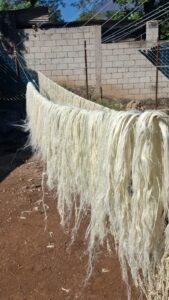
Fiber made from Pineapple leaves, Image credit: Image credit: PINA&KAKAW
I saw a country with enormous potential, but also a country where meaningful change was needed. When the opportunity came to establish 4ocean’s operations in Guatemala in 2019, I saw firsthand how environmental work could also create jobs, support families, and strengthen communities.
That experience completely changed my perspective. I realized that environmental impact and social and economic development don’t have to be separate. They can, and should, go hand in hand.
Eight years later, that same belief continues to drive what we’re building today with PINA&KAKAW and CONSERVAR. Guatemala has given me so much, and I want to continue giving back by creating opportunities, protecting its natural resources, and proving that meaningful change is possible.
I realized that environmental impact and social and economic development don’t have to be separate. They can, and should, go hand in hand.
2. Your work has evolved from removing waste from waterways to turning agricultural waste into textiles. How did that shift happen, and how did you and your wife, Daniela, come up with the idea for PINA&KAKAW?
Kevin Kuhlow: The idea behind PINA&KAKAW actually goes back much further than most people realize. My wife, Daniela, had the idea of producing textiles from pineapple fiber before we even met. In fact, I remember her mentioning pineapple fiber on one of our very first dates back in 2017. At the time, neither of us knew that years later we would be turning that conversation into a business.
When I moved to Guatemala in 2018, our focus eventually shifted toward the growing problem of plastic and trash pollution, especially along the Caribbean coast of Guatemala, where we were living. We were seeing firsthand how badly the coastline and surrounding communities were being affected, and the question became, how do we help solve this problem?
That eventually led to the opportunity to establish and lead 4ocean’s operations in Guatemala in 2019. Over the next five years, our team recovered more than 4 million pounds of plastic and trash from the Caribbean coastline and Río Motagua. But something that really stood out to me was the amount of textile waste we were collecting, including more than 500,000 pounds of discarded footwear, such as shoes and sandals, along with significant quantities of other textiles.
That experience really helped push Daniela’s original idea toward becoming a reality. We had seen the environmental consequences of waste firsthand, and we knew there had to be better alternatives to some of the materials being used in the textile industry.
As we began exploring the pineapple industry more closely, we discovered another serious environmental problem. After the second or third harvest, pineapple plants are no longer productive, and farmers commonly use chemicals and burning to clear their fields before planting again. This practice not only contributes to air pollution and carbon emissions but also damages the soil, affects biodiversity, and impacts the health of surrounding communities.
That’s when we realized the opportunity was much bigger than simply producing a sustainable textile. What if we could change that entire process? Instead of treating those pineapple plants as waste and burning them, what if we could turn them into something valuable while helping farmers restore their land?
We also understood that having a sustainable product wasn’t enough. We needed to tell the right story, and more importantly, make sure that story was backed by real, measurable environmental and social impact.
That’s where PINA&KAKAW really came to life. We developed a model where we work directly with small pineapple growers, manually clear their fields, extract natural fibers from the leaves to produce yarn and textiles, and send the remaining organic material to be composted and eventually returned to the soil.
For Daniela and me, it was never just about producing textiles. It was about preventing agricultural burning, restoring soil health, creating employment opportunities for women and young people in rural communities, and proving that agricultural waste can have real economic value.
I often say that our yarn and fabric are really the icing on the cake. The real impact happens long before a single thread is produced, starting in the fields with the farmers, the people we employ, and the environmental damage we’re helping prevent.
Looking back, it’s incredible how everything connects. What started as a conversation on one of our first dates in 2017, combined with years of hands-on experience fighting pollution in Guatemala, eventually became PINA&KAKAW. Daniela had the vision from the beginning, and together we found a way to turn that vision into a business built around environmental, social, and economic impact.
3. How do you turn discarded pineapple leaves into fiber and fabric, and what makes the material special? What has been the hardest part of developing it?
Kevin Kuhlow: The process starts in the pineapple fields. After the second or third harvest, when the plants are no longer productive, our team manually clears the fields instead of allowing them to be chemically treated and burned. We separate the leaves from the rest of the plant and use a mechanical extraction process to recover the natural fiber.
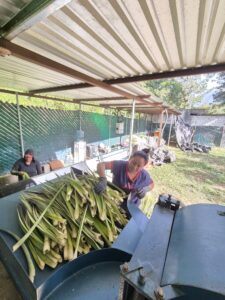
Image Credit: PINA&KAKAW
From there, the fiber goes through cleaning and softening processes before being blended with other materials, such as cotton, to produce yarn that can eventually be knitted or woven into fabric. What’s important is that nothing goes to waste. The remaining organic material is sent to our composting partners, where it’s transformed into natural fertilizer that can be returned to the growers to help restore their soil.
What makes pineapple fiber special is its natural characteristics. It’s lightweight, breathable, strong, and versatile. As a natural plant-based fiber, it’s biodegradable and offers a more environmentally friendly alternative to petroleum-based synthetic fibers. When blended with other natural materials, such as cotton, we can create fabrics that are comfortable, breathable, and suitable for a variety of applications, from clothing and home textiles to flooring. Of course, the biodegradability of the finished product depends on the other fibers, dyes, and treatments used.
Sometimes the hardest part of innovation isn’t the technology or the process itself. It’s getting people to believe that something different is possible.
But for us, what makes it truly special is that we’re not growing anything specifically to produce fiber. We’re taking something that would otherwise be discarded or burned and giving it a second life, while creating employment opportunities and helping restore agricultural soils.
As for the biggest challenge, I would say it was getting to that finished yarn and fabric, but even more than the technical challenges, it was overcoming all the “NOs” we encountered along the way.
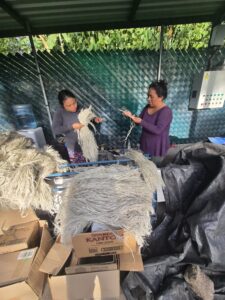
Image Credit: PINA&KAKAW
We heard everything from “it’s impossible” to “this will never work.” Although pineapple fiber has been around for generations, it was practically unheard of in Guatemala’s textile industry, and unfamiliar to many of the manufacturers we approached in the Americas. We were introducing something that most people had never worked with before, and convincing them to give it a chance wasn’t easy.
There were plenty of closed doors, unsuccessful trials, and moments of frustration. But Daniela and I believed in what we were doing, and we weren’t willing to give up simply because someone told us it couldn’t be done.
In 2026, we finally produced our first blended yarn and fabric right here in Guatemala, using the country’s existing textile manufacturing infrastructure. That was a huge milestone for us, not just because we had a finished product in our hands, but because we had proven that something so many people told us was impossible could actually be done.
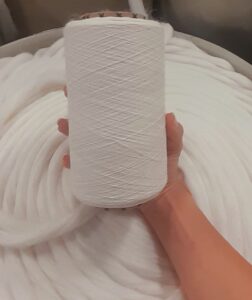
Pineapple leaf fiber yarn, Image Credit: PINA&KAKAW
And that’s probably been one of the biggest lessons of this entire journey. Sometimes the hardest part of innovation isn’t the technology or the process itself. It’s getting people to believe that something different is possible.
4. Guatemalan designer Desireé Garcia has used your fabric to create a garment. What drew her to the material, and what did you learn from seeing it come to life?
Kevin Kuhlow: I actually connected with Desireé through LinkedIn. After reaching out to her, we arranged an in-person meeting, and from that very first conversation, she immediately connected with what we were doing at PINA&KAKAW. She loved not only the material itself but also the environmental and social impact behind it. There was no hesitation on her part. She wanted to get involved, help us, and start putting pieces together right away.
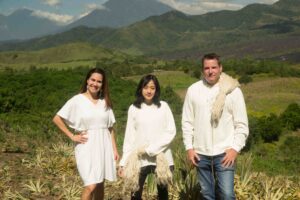
Left to Right: Daniela, Desireé Garcia and Kevin, Image credit: PINA&KAKAW
For Daniela and me, that was incredibly encouraging. After spending so much time developing our yarn and fabric, overcoming technical challenges, and hearing so many people tell us it couldn’t be done, having a talented Guatemalan designer immediately recognize its potential meant a lot.
What really stood out to me was seeing how someone from the fashion industry could take our material and bring an entirely different creative perspective to it. We had spent so much time focusing on the environmental impact, fiber extraction, yarn development, and fabric production that seeing it transformed into an actual garment was another major milestone.
It also reinforced something we’ve believed from the beginning: innovation doesn’t happen alone. It takes people who are willing to believe in something new, take a chance, and help bring an idea to life.
And I think there’s something particularly special about this collaboration. We’re taking agricultural waste from Guatemalan pineapple fields, transforming it into yarn and fabric through Guatemala’s textile industry, and now working with a Guatemalan designer to create finished garments.
It’s a product made in Guatemala, by Guatemalans, with the potential to reach the global fashion industry.
For us, that’s something to be incredibly proud of, and we’re excited to see where this collaboration leads.
Innovation doesn’t happen alone. It takes people who are willing to believe in something new, take a chance, and help bring an idea to life.
5. Where do you see pineapple-leaf textiles fitting into luxury fashion? What would need to happen before more designers and brands could use them?
Kevin Kuhlow: I absolutely believe pineapple-leaf textiles have a place in luxury fashion, but I want to make something very clear: our goal at PINA&KAKAW has never been to limit our material to the luxury market. We want anyone and everyone to have access to our yarn and fabric.
Luxury fashion is an exciting opportunity because designers are often looking for innovative materials, unique textures, and meaningful stories behind their creations. Our pineapple fiber offers all of that, along with environmental and social impact that begins long before the fabric is produced.
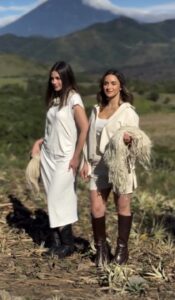
Image Credit: PINA&KAKAW
But we also see tremendous opportunities in everyday clothing, sportswear, home textiles, hospitality, and even flooring. We don’t want to limit our exposure to one industry or one type of customer. We want pineapple fiber to become a widely accessible alternative that manufacturers and designers around the world can incorporate into their products.
That’s also why we’ve made a conscious effort to keep our pricing competitive. We don’t believe that choosing a more environmentally responsible material should automatically mean paying a premium. If we truly want to make an impact on a larger scale, our materials need to be accessible, affordable, and commercially viable.
As for what needs to happen before more designers and brands can use our materials, the biggest priorities are continuing to improve consistency, expanding our production capacity, and developing different yarn blends and fabric options to meet the needs of different industries.
We’ve already demonstrated that pineapple fiber can be processed into yarn and fabric using Guatemala’s existing textile manufacturing infrastructure. That’s a huge advantage because it means we don’t necessarily need to reinvent the entire textile production process.
We also need more collaborations with designers and manufacturers who are willing to experiment with new materials. Every partnership helps us improve our products and demonstrate what’s possible.
I don’t want PINA&KAKAW to become an exclusive material that only a handful of luxury brands can afford. I want to see our yarn and fabric being used by everyone, from independent designers and small businesses to major international manufacturers.
At the end of the day, the more industries and brands that adopt our material, the more pineapple waste we can prevent from being burned, the more farmers we can support, and the more employment opportunities we can create in rural Guatemala.
For Daniela and me, that’s how we measure success. Not by how exclusive our material becomes, but by how accessible it becomes and how much positive impact we can generate along the way.
6. PINA&KAKAW is about more than creating a new textile, while CONSERVAR works on wider environmental and community challenges. How do these two ventures complement each other?
Kevin Kuhlow: For Daniela and me, PINA&KAKAW and CONSERVAR are really two different ways of working toward the same goal: creating meaningful environmental and social impact while improving opportunities for communities in Guatemala.
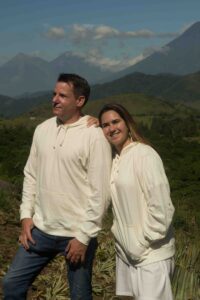
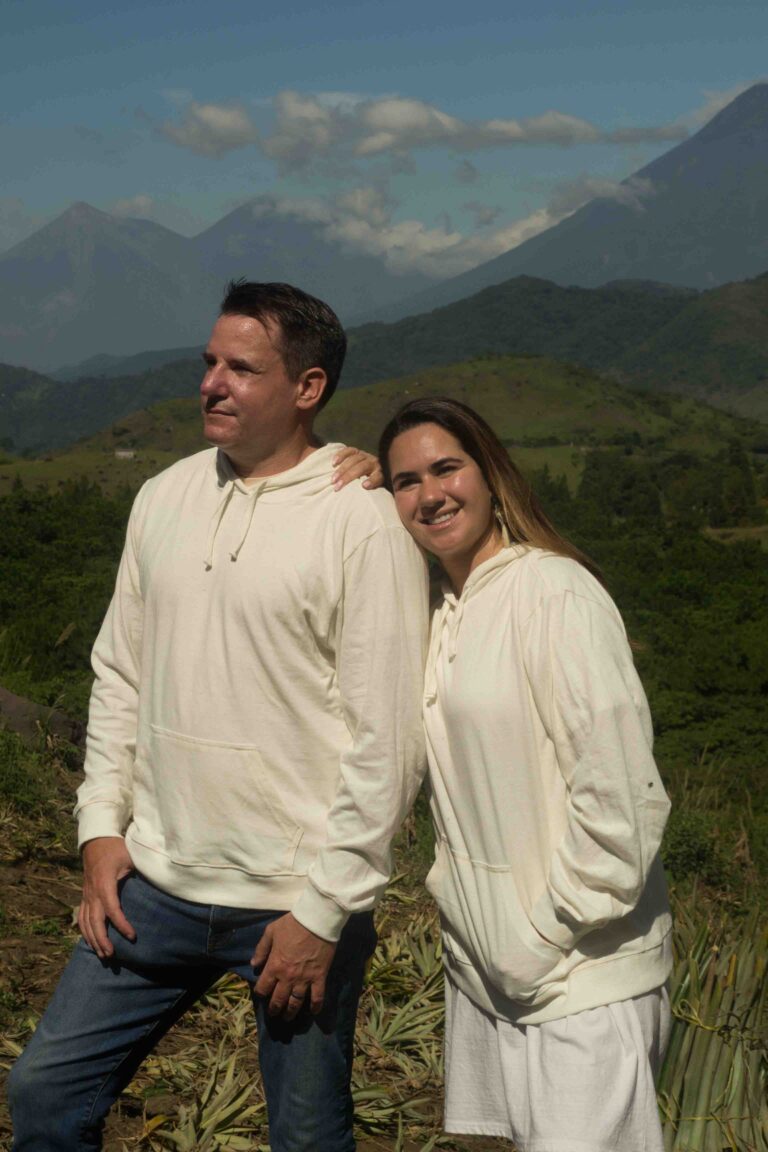
Kevin & Daniela, Image Credit: PINA&KAKAW
PINA&KAKAW is our business, built around the principles of a circular economy. We’re demonstrating that environmental challenges can also become economic opportunities. By preventing agricultural burning, transforming pineapple waste into valuable textile materials, creating jobs for women and young people, and returning organic material to the soil, we’re building a business where environmental and social impact are part of everything we do.
CONSERVAR, on the other hand, is our nonprofit organization, which allows us to address environmental and community challenges that go beyond what a business like PINA&KAKAW can accomplish. Our mission is centered around three principles: Conserve, Rescue, and Restore. That includes protecting our waterways and coastlines, improving access to safe drinking water, organizing community cleanups, promoting environmental education, and developing long-term restoration projects.
One of the things I learned during my five years with 4ocean is that environmental problems are rarely isolated. What happens inland eventually affects our rivers, lakes, and oceans. Poor agricultural practices, improper waste management, and a lack of environmental education are all connected.
That’s why I see these two organizations complementing each other so well. PINA&KAKAW allows us to demonstrate how sustainable practices can work through a commercially viable business model, while CONSERVAR gives us the opportunity to work directly with communities, build partnerships, and address environmental problems that don’t necessarily have an immediate financial return.
And something that’s very important to both of us is that we don’t want to simply talk about sustainability. We want to be actively involved in the communities, working alongside the people who are directly affected by these challenges.
At the end of the day, PINA&KAKAW is about proving that doing good for the environment can also be good business, while CONSERVAR is about making sure that environmental and social progress reaches communities beyond our business operations.
They have different approaches, but they share the same values, and together they allow us to create a much broader and more lasting impact in Guatemala.
7. You have spoken about creating meaningful jobs for local women and supporting agricultural communities. What does that look like on the ground, and what has this work taught you about what real impact means?
Kevin Kuhlow: For me, creating meaningful jobs goes far beyond simply hiring someone and paying them a salary. It’s about providing fair wages, safe working conditions, treating people with dignity and respect, and giving them opportunities they might not otherwise have.
This is something I learned during my five years leading 4ocean’s operations in Guatemala, where we grew to more than 50 full-time employees, many from remote coastal communities. We made it a priority to pay above the minimum wage, provide benefits, and ensure our employees were taken care of. I saw firsthand how one stable job could positively impact an entire family.
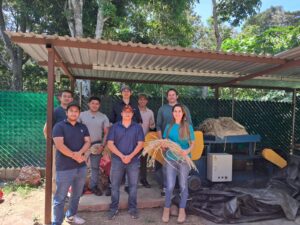
Image Credit: PINA&KAKAW
We’re carrying those same principles into PINA&KAKAW. On the ground, that means hiring people directly from the rural communities where we operate, particularly women and young people who often face limited employment opportunities. Our team works alongside local pineapple growers, manually clearing fields, extracting fiber, and helping us build a new value chain around something that was previously considered agricultural waste.
One thing I’m especially proud of is the role women play in our operations. They’re not simply participating in the project, they’re an essential part of making it work. From working in the fields to operating our fiber extraction equipment, they’re demonstrating that women can take on roles in agricultural and industrial operations that have traditionally been dominated by men.
And our impact extends beyond our employees. By working with small pineapple growers, we’re helping them clear their fields without relying on burning, while returning organic material to the soil through composting. That means healthier working conditions, opportunities to improve soil health, and a more sustainable future for their farms.
But I think the biggest lesson I’ve learned over the years is that real impact isn’t just about how many pounds of waste you collect, how much fiber you produce, or how many tons of carbon emissions you prevent. It’s about the people behind those numbers.
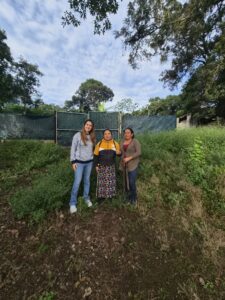
Image Credit: PINA&KAKAW
It’s about seeing someone have a stable income to support their family, watching a woman gain confidence operating machinery, or hearing a farmer recognize that there’s a better alternative to burning their fields.
We track and measure everything we do because transparency and accountability are extremely important to us. But some of the most meaningful results are the ones you can’t always put into a spreadsheet.
For Daniela and me, success isn’t simply about growing PINA&KAKAW into a profitable business. It’s about making sure that as we grow, the communities, farmers, and people who help make that growth possible are growing with us.
That’s what real impact means to me: creating opportunities that improve people’s lives while leaving the environment better than we found it.
It’s about seeing someone have a stable income to support their family, watching a woman gain confidence operating machinery, or hearing a farmer recognize that there’s a better alternative to burning their fields.”
8. Since starting PINA&KAKAW, what has surprised you most about the journey of developing a new material and introducing it to the textile industry? Have there been any experiences or partnerships that have particularly shaped your thinking?
Kevin Kuhlow: What has surprised me the most is just how much we’ve been able to accomplish in such a short period of time, especially considering how little we knew about the textile industry when we first started. We came into this with a strong background in environmental operations and waste management, but developing a natural fiber into a commercially viable yarn and fabric was an entirely different challenge.
I think one of the biggest surprises was discovering how difficult it can be to introduce something new into an established industry. Pineapple fiber isn’t a new discovery, it’s been used for generations in other parts of the world, particularly in the Philippines. But here in Guatemala, it was something that most textile manufacturers had never worked with before. We encountered plenty of skepticism, closed doors, and people telling us it simply wasn’t possible.
At the same time, what has impressed me the most is how quickly things can move when you find the right people who believe in what you’re doing. We’ve been fortunate to work with local textile manufacturers, agricultural partners, universities, and designers who were willing to take a chance on something different.
Our collaboration with Universidad Rafael Landívar through ClimateLaunchpad was particularly important. Winning the national competition in Guatemala and then the Central American regional finals gave us the opportunity to represent Guatemala at the global finals in Singapore. That experience opened our eyes to how much international interest there is in innovative materials and circular economy solutions.
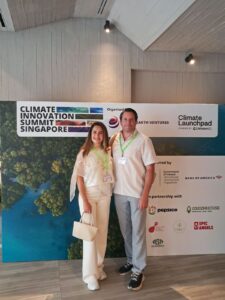
Image Credit: PINA&KAKAW
Another experience that really shaped our thinking was traveling to the Philippines earlier this year to learn more about their pineapple fiber industry. Seeing how the material has been used and developed there helped us understand both the potential of pineapple fiber and the opportunities we have to build something unique here in Guatemala.
We’ve also learned a tremendous amount from working directly with textile manufacturers and designers. Producing fiber is one thing, but turning it into a yarn that can be spun consistently and a fabric that designers actually want to use is something completely different. Every trial, every setback, and every collaboration has taught us something valuable.
But perhaps the biggest lesson has been understanding that you don’t have to know everything when you start. You have to be willing to learn, surround yourself with the right people, and be persistent enough to keep going when things don’t work the first time.
Daniela and I started with an idea and a belief that we could create something meaningful. Today, we have our first yarns, fabrics, collaborations with designers, and companies in different industries testing our materials.
And what excites me the most is that we’re still at the very beginning. We’ve proven that it’s possible. Now we’re focused on proving just how far we can take it.
But perhaps the biggest lesson has been understanding that you don’t have to know everything when you start. You have to be willing to learn, surround yourself with the right people, and be persistent enough to keep going when things don’t work the first time.
9. Looking ahead, what would you most like to achieve with PINA&KAKAW over the next five years—and what do you hope the people and communities around the business will gain from its growth?
Kevin Kuhlow: Over the next five years, I want to see PINA&KAKAW grow from what we’ve proven is possible today into a commercially successful business that supplies pineapple fiber, yarn, and fabric to manufacturers and brands around the world.
We’ve already accomplished some major milestones, from developing our first blended yarns and fabrics here in Guatemala to working with designers and having companies in different industries test our materials. Now the challenge is scaling our operations, increasing production capacity, improving efficiency, and building long-term relationships with customers.
But one thing Daniela and I have been very clear about from the beginning is that we don’t want to build a successful textile company at the expense of the people or the environment. We want our success to be measured by how much positive impact we create along the way.
As PINA&KAKAW grows, I want to see more pineapple fields cleared without burning, more organic material returned to the soil, and more small farmers benefiting from sustainable agricultural practices. I want us to create meaningful, stable employment opportunities, especially for women and young people in rural communities where those opportunities can be limited.
It’s to build a company that demonstrates how business can be a driving force for environmental restoration, economic opportunity, and lasting community development.
I would also love to see Guatemala become recognized internationally as a leader in pineapple fiber innovation and sustainable textile production. Guatemala already has an established textile industry, and I believe we have a real opportunity to introduce a new natural material into that industry while creating an entirely new agricultural value chain.

Image Credit: PINA&KAKAW
And I don’t want our materials to be limited to luxury fashion or a handful of exclusive brands. I want pineapple fiber to become accessible and competitive enough that it can be used in everyday clothing, home textiles, hospitality, flooring, and other industries. The more widely our materials are adopted, the greater the environmental and social impact we can generate.
On a personal level, one of the things that would make me most proud five years from now would be visiting the same communities where we started and seeing how they’ve grown alongside us. Seeing employees who have developed new skills and taken on leadership roles, families benefiting from stable incomes, and farmers who no longer see burning as their only option.
For me, the ultimate goal isn’t just to build a company that produces sustainable textiles. It’s to build a company that demonstrates how business can be a driving force for environmental restoration, economic opportunity, and lasting community development.
If five years from now we’re producing materials for customers around the world while improving the lives of hundreds of families and helping restore agricultural land here in Guatemala, then I would consider that a tremendous success.
And knowing Daniela and me, even then, we’ll probably feel like we’re just getting started.