
As global luxury axis shifts toward India in the Year of the Horse, Hermès proves that consistency – not noise – is the highest currency.
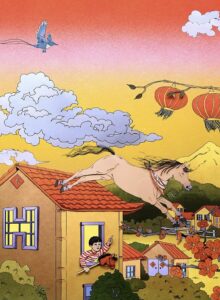
Image Courtesy- Hermès
In the modern luxury landscape, Hermès remains the ultimate outlier. While competitors chase scale, Hermès prioritizes consistency at every cost. In India, where the market is often synonymous with ‘more,’ Hermès teaches us that silence is the highest form of authority. Its refusal to over-expose—limiting icons like the Birkin not out of strategy, but out of a genuine respect for the limits of human craft—turns ownership into a quiet achievement rather than a public statement.
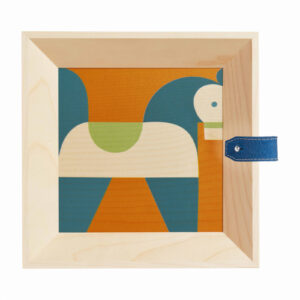
Hermès Animaux Blocks vide-poche in sycamore
As we enter the Lunar Year of the Horse (2026), the house returns to its 1837 roots. For a brand born in a harness workshop, the horse is not a marketing theme; it is its DNA. In a world that speaks constantly, Hermès endures by letting time and restraint do the talking.”
In 2026, the industry is moving away from calling it “Chinese New Year” and toward “Lunar New Year.” as brands want to appeal to the “Global East.” While the festival is Chinese in origin, the Zodiac (The Horse) is a universal luxury symbol.
The India Connection: India has a deep, ancient obsession with the Horse (think of the Ashwamedha or the Marwari horse). By launching “Year of the Horse” collections, Hermès is talking to the HNI (High Net Worth) polo-playing elite in Delhi and Mumbai
They are buying it not because they celebrate the Lunar New Year, but because the Horse is a symbol of power and success in Indian culture too.
While the “Red and Gold” palette is a nod to Lunar traditions, the 2026 collection is a masterclass in Equestrian Heritage that resonates deeply with India’s “Old Money” elite.
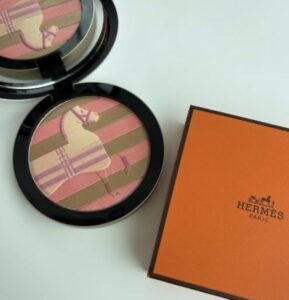
Rocobar limited edition face powder
- The Hero Pieces: Look for the “Rocabar” limited-edition face powder and the Grand Galop silk twill scarf. These aren’t just fashion items; they are archival revivals of patterns from the 1920s.
- The Indian “Stealth” Launch: In stores like The Chanakya (New Delhi) and the Jio World Plaza (Mumbai), Hermès is bypassing loud signage in favor of “Private Client Experiences.” They are inviting top-tier collectors to view high-jewelry and “Home” collections (like the Les Six Pas du cheval printed throws) that symbolize the horse as a totem of success and momentum.
Why India is the “New North” for Hermès
As of February 2026, the global luxury axis is officially leaning toward India. While China’s market has entered a “Coming of Age” phase, maturing and slowing, India is seeing 6-8% organic growth in the luxury sector.
- The Flagship Shift: Hermès is moving away from smaller boutiques toward “Mega-Flagships” (over 500 sqm). This signals that they see India not as a “travel retail” spot, but as a permanent, high-volume home for the brand.
- The Legacy Handover: This month is also historically significant for the brand as Véronique Nichanian, the legendary men’s designer of 37 years, is stepping down, handing the reins to Grace Wales Bonner (starting 2027). This “changing of the guard” makes current collections—especially the equestrian-themed ones—instant collector’s items.
“In February 2026, as the Year of the Horse takes flight, Hermès reminds us that true luxury is not about the speed of the race, but the pedigree of the spirit. In the corridors of New Delhi and Mumbai, the ‘Quiet Luxury’ of the saddle stitch is replacing the loud logo. Hermès isn’t just selling a bag; they are selling a 189-year-old promise that says: ‘Consistency is the only currency that never devalues.'”
All Images courtesy – Hermès


- Aekta Kapoor (2)
- Aleyssandra Mendosa (1)
- Anuj Puri (3)
- Arvind Vijaymohan (1)
- Ashok Som (5)
- Ashutosh Limaye (1)
- Deepali Nandwani (19)
- Eva Pavithran (1)
- Gargi Guha (4)
- Gina Mathew (1)
- Ishanee Patra (1)
- Jenifer Willig (1)
- Joanne Pereira (4)
- Jordan Phillips (1)
- Kishor Pate (1)
- L.Aruna Dhir (4)
- Lauren Mote (1)
- LuxuryNext Team (205)
- Megha Puri (10)
- Mitch Ritter (3)
- Nishant Bangar (3)
- Nolan Lewis (17)
- Radhika Singh (1)
- Sanjana Chauhan (68)
- Shibani Dasgupta (1)
- Soumya Jain (3)
- Sue Stephenson (1)
- TheLuxury NextTeam (17)
- Veronique Poles (1)